The Licensed Argument Isn’t The Argument We Should Be Having
Let’s get the headline out of the way: Adobe Firefly 3 trains exclusively on Adobe Stock’s licensed library of over 300 million images, which the company markets with all the confidence of someone selling ethical seafood at a factory farm. This is supposedly the answer to every hand-wringing conversation about AI art and artist exploitation. The licensing deal means everyone got paid, the logic goes, so we can all relax now.
Except this framing mistakes a legal settlement for a moral one. Yes, Adobe negotiated licensing agreements. Yes, this technically puts Firefly 3 in a different category from tools trained on scraped internet data. But a licensing agreement doesn’t actually address the core problem that’s reshaping the creative economy right now. It just adds a veneer of legitimacy to a system that’s fundamentally broken.
The real story isn’t about where the training data came from. It’s about what happens when clients stop commissioning human artists entirely.
The Numbers Are Brutal And Getting Worse
A 2025 MIT Media Lab study released data that should alarm anyone who cares about creative labor: 67% of professional illustrators reported losing commissions they directly attributed to clients switching to AI image generation tools. Two-thirds. Not the 15% you might nervously expect. Sixty-seven percent of working professionals in a single year. This isn’t a niche concern or a transitional labor disruption. This is industrial-scale displacement happening in real time.
Meanwhile, Midjourney alone reported over 20 million registered users as of Q3 2025, and the platform generates an estimated 3 million images every day. Three million images. Every day. That’s not happening in isolation from existing creative markets. Every image generated is a commissioned illustration that didn’t go to an illustrator. Every graphic design brief answered by an AI prompt is a junior designer who didn’t get hired. The scale is absurd and accelerating.
Adobe’s licensing arrangement with its own stock photographers and illustrators doesn’t solve this problem. It might even make it worse. When a corporation can claim moral authority because it paid for the training data, it owns the cultural narrative too. The story becomes “we did it the right way,” which implicitly separates Firefly 3 from “unethical” tools like Stable Diffusion. But from the perspective of an illustrator losing work to any generative AI tool, ethical sourcing of training data is about as meaningful as fair-trade coffee when the coffee shop replaced the barista with a machine.
The Copyright Office Just Reinforced That These Images Aren’t Really Yours Anyway
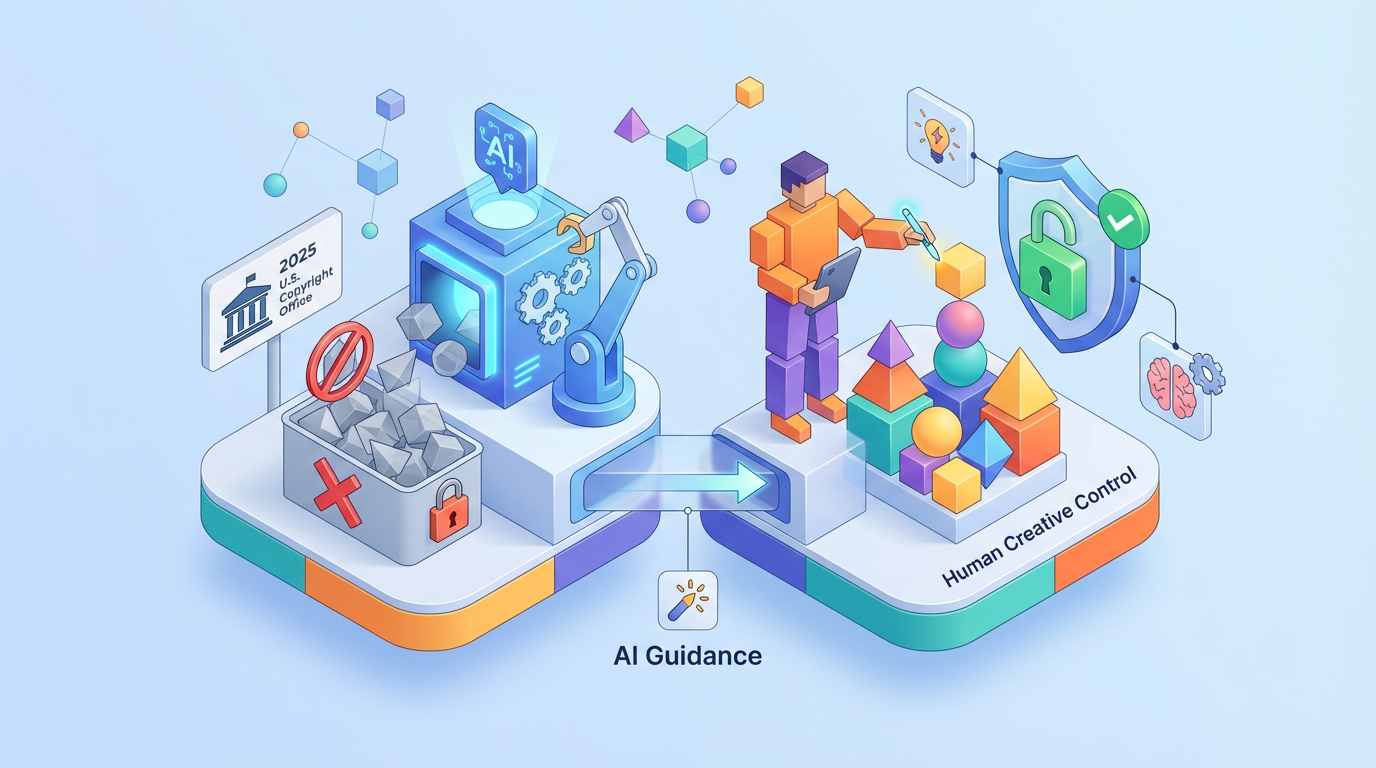
Here’s where it gets genuinely weird. The U.S. Copyright Office updated its AI guidance in February 2025 and clarified something that should concern everyone using these tools: AI-generated images remain uncopyrightable unless a human author exercises sufficient creative control in the output. Read that closely. “Sufficient creative control.” Not tweaking a slider. Not writing a detailed prompt. The Copyright Office hasn’t definitively explained what “sufficient” actually means, and that ambiguity is doing a lot of heavy lifting for the AI companies right now.
Think about the practical implications. You use Firefly 3 to generate an image for a client. That image might technically lack copyright protection. Your client discovers the image they paid for isn’t actually defensible as their intellectual property. Now they’re exposed. Now you’re exposed. This is the system we’re building, and it’s being marketed as “commercially safe” because the training data was licensed. The training data licensing and the copyright emptiness are two entirely different problems, and pretending they’re the same thing is either naive or deliberately misleading.
The Settlement Phase Doesn’t Equal Justice
The Andersen v. Stability AI lawsuit, which named Stable Diffusion, Midjourney, and DeviantArt as defendants, reached a partial settlement phase in 2025 with ongoing discussions about artist compensation. Some corners of the internet are reporting this as a victory. Artists are finally getting compensation, the narrative goes. Except “settlement phase” is corporate speak for “this is going to take years and artists will probably receive fractional payments in the end.”
The lawsuit was necessary because the default position of the AI industry was always extraction without consent or compensation. That’s still the default for most generative AI tools. Firefly 3 bypassed that entirely by taking the licensing route, which is genuinely different, but it’s also a way for Adobe to avoid litigation while maintaining the same economic outcome. The artists’ images are still being transformed into a product they didn’t authorize. They received a one-time licensing fee instead of ongoing compensation as their work generates revenue. That’s a settlement, sure. Whether it’s justice depends entirely on your definition.
So What’s The Real Question Here?
The honest version of this conversation isn’t “should we worry about AI art trained on licensed data?” It’s “what do we actually value in creative work?” Do we value the labor of making things, or do we value only the output? Do we believe human artists deserve ongoing compensation when their work contributes to training systems that replace their future employment, or do we think a one-time licensing fee squares that moral debt?
Adobe Firefly 3 is a genuinely advanced tool. The technical accomplishment is real. But licensed training data doesn’t actually answer the ethical questions. It just makes us feel better about asking them. The real debate isn’t about Adobe or Firefly specifically. It’s about whether we’re building a creative economy where tools augment human artists, or one where they replace them. Licensing agreements can exist in either future. The training data sourcing is almost irrelevant to which future actually materializes.
If you want to dig into the specifics of how Firefly operates, Adobe Firefly Official Overview has the technical specs. And if you want to understand the copyright landscape around all this, the U.S. Copyright Office AI Guidance 2025 is required reading. But neither of those documents will tell you whether we’re making a good choice as a creative culture. That’s still on us to argue about. So please do. Argue about it. Passionately. The alternative is accepting whatever the default becomes.
