The Numbers Don’t Lie, But They Don’t Tell the Whole Story Either
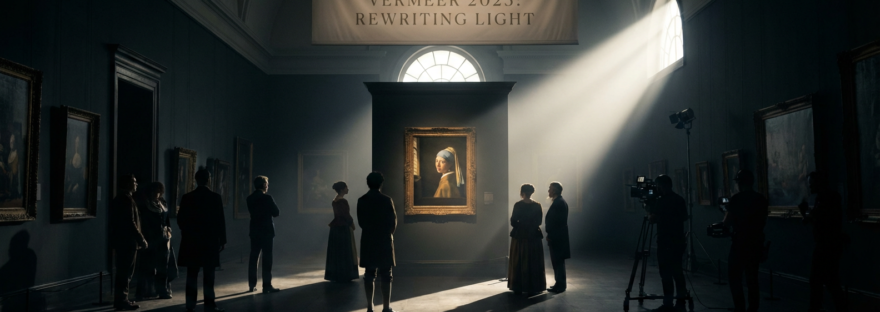
Over 340,000 people flooded the Getty Center in the first ten weeks of 2025 for “Vermeer and the Dutch Masters.” That’s not just a blockbuster; that’s a cultural earthquake. The museum shattered its own single-exhibition attendance record, and yes, everyone’s talking about it. But here’s what actually matters: they weren’t just showing up for the Vermeer name. They came because word had leaked that something fundamental about how we understand light in painting was being recalibrated in real time.
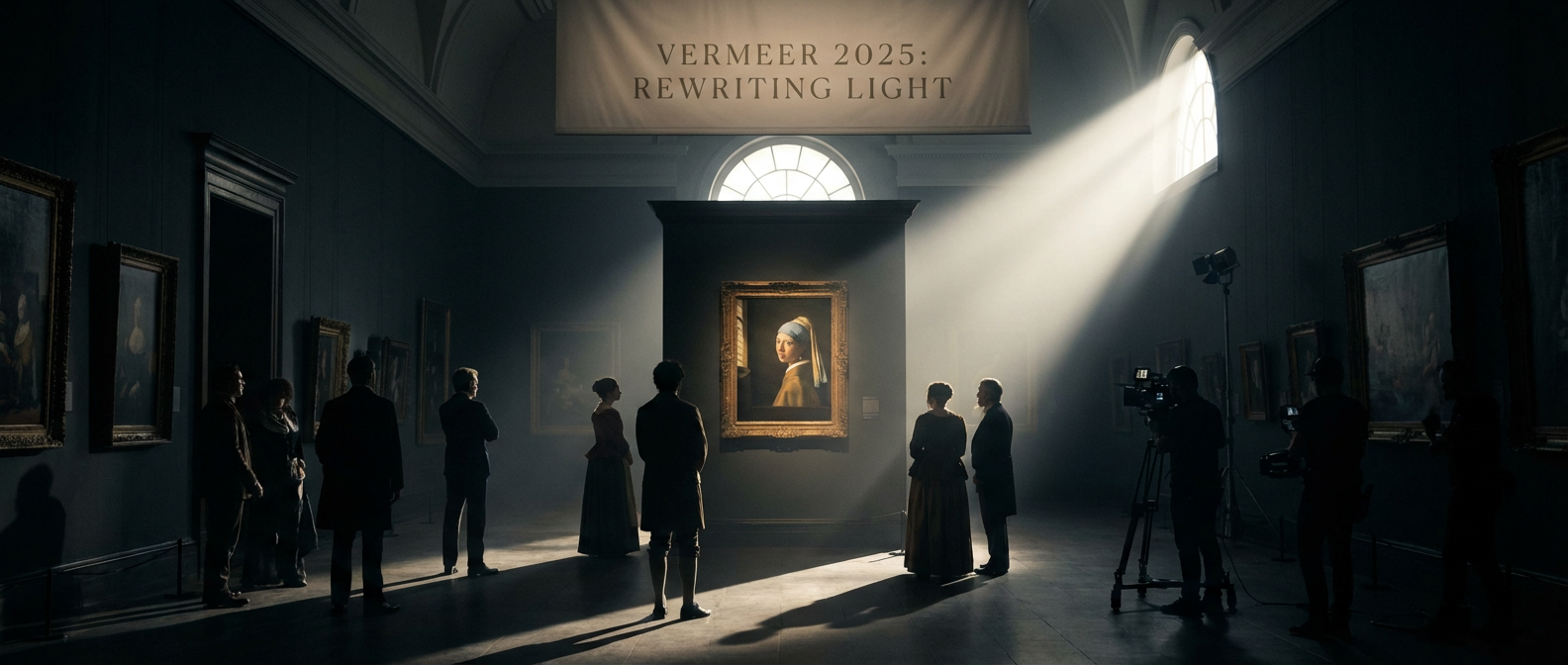
This wasn’t a retrospective masquerading as scholarly achievement. This was forensic investigation dressed up as art history. The Getty didn’t just hang paintings on walls and let Instagram do the heavy lifting. They weaponized technology, assembled an international research coalition, and forced us all to reckon with the fact that Vermeer’s technical mastery operated on a completely different plane than we’d been taught to appreciate.

The Pigment Detective Work That Changed Everything
In 2024, researchers at the Rijksmuseum Vermeer Research program deployed MA-XRF scanning across multiple paintings. What they found wasn’t some minor footnote for conservation textbooks. They confirmed that Vermeer deliberately mixed lead white with smalt to achieve his signature window-light effects. Not accidentally. Not as a byproduct of available materials. Intentionally.
Think about what that means. For centuries, art historians have waxed poetic about Vermeer’s “mysterious luminosity” as if it descended from heaven fully formed. We’ve romanticized it. Mystified it. Written dissertations around the edges of it without understanding its mechanical foundation. The smalt revelation strips away the mythology and reveals something far more interesting: a painter who understood chemistry like a scientist, who conducted optical experiments with pigment the way physicists work with light itself.
Lead white, smalt. Two materials that don’t naturally gravitate toward each other. But Vermeer knew something. He understood that smalt, that cobalt-based blue pigment, when mixed in precise proportions with lead white, produces a specific quality of diffused light. Not bright. Not reflective. Soft. Directional. The kind of light that seems to emanate from inside the canvas rather than bounce off it. This wasn’t intuition. This was methodology.
The Supply Chain That Traveled 5,000 Miles
A 2025 Nature Heritage study traced Vermeer’s ultramarine pigment back to its source: lapis lazuli mined in Afghanistan’s Badakhshan province. Stretched across a map, that’s roughly 5,000 miles of medieval and early modern trade routes. Think about that logistics chain. A precious stone pulled from Afghan mountains, transported across deserts and through hostile territories, processed in European workshops, ground into powder, suspended in oil. The paint on Vermeer’s canvas is literally embedded with political geography.
This matters because it demolishes the romantic notion of the isolated genius working in solitude. Vermeer wasn’t some Dutch master conjuring beauty from thin air. He was a node in a vast network of international commerce, connected to merchant routes, political alliances, and economic realities that stretched from northern Europe to central Asia. His technical brilliance was inseparable from his access to rare, expensive materials. The blue in his paintings wasn’t metaphorical transcendence. It was wealth converted into pigment.
And here’s where it gets really interesting: he didn’t waste it. Only 36 paintings are definitively attributed to Vermeer across his entire lifetime. Thirty-six. When you realize that each one required coordinating materials from across continents, managing complex supply chains, and executing techniques that demanded absolute precision, the scale of his ambition becomes almost frightening. Every painting was a statement of intent. There’s no filler in the Vermeer catalogue. There’s no experimental phase where he was still figuring things out. Almost everything he produced was a fully realized technical achievement.
When Museums Become Laboratories
The Getty’s involvement in this research saga represents something subtle but significant happening in museum culture. They didn’t position themselves as custodians protecting precious objects. They positioned themselves as investigators. The Getty Conservation Institute allocated $2.3 million in 2025 specifically toward new hyperspectral imaging research directly inspired by findings from this exhibition. That’s not exhibition markup. That’s institutional commitment to methodology.
Hyperspectral imaging doesn’t just show you what’s there. It shows you layers. It shows you revisions. It shows you the thinking process frozen in pigment. When you scan Vermeer’s work through hyperspectral technology, you’re not just authenticating paintings. You’re watching his hand move across the canvas. You’re seeing where he changed his mind. You’re witnessing the gap between conception and execution, between intention and result.
The Getty Center Exhibitions program could have coasted on Vermeer’s reputation. Instead, they created infrastructure for understanding. That’s the difference between nostalgia and actual scholarship. That’s the difference between a blockbuster and a breakthrough.
What This Means for How We See Painting Moving Forward
Here’s what troubles me about contemporary art criticism: we’ve become too comfortable with the idea that technical mastery and emotional depth are separate pursuits. The Vermeer exhibition obliterates that false dichotomy. His technical innovations weren’t in service of some transcendent vision. The technical innovation IS the vision. The way light behaves on his canvas isn’t decoration for his compositions. It’s the composition.
When you understand that Vermeer was deliberately mixing specific pigments in specific proportions to achieve optical effects that contemporary viewers couldn’t have fully articulated but could absolutely feel, it reframes the entire enterprise of art-making. He wasn’t painting light. He was constructing it. Engineering it out of materials. Every decision, from sourcing Afghan lapis lazuli to experimenting with smalt and lead white ratios, was directional. Purposeful. Calculated.
The exhibition numbers tell us something was compelling about this show. The research tells us why. These weren’t paintings we misunderstood slightly. These were paintings we fundamentally misread because we lacked the technology and methodology to see how they were actually made. The Getty’s 2025 program didn’t just display masterpieces. It revealed the master’s process. And that changes everything about how we look at painting, not just from the Dutch Golden Age, but from any period when technique and vision became indistinguishable.
What’s your take on this intersection of conservation science and art historical interpretation? Has revisiting Vermeer through this technical lens changed how you experience his work, or does it feel like information overload that misses the point entirely?
