Interview: How First-Time Novelists Find Their Voice

Writer working at desk with notebook and coffee

There’s a question I’ve been carrying with me to every interview lately, the kind that keeps tugging at my elbow mid-conversation: How does a writer go from mimicking the voices they admire to producing something unmistakably their own? It’s one thing to study craft—sentence structure, pacing, dialogue tags—but voice is slipperier. Voice is the fingerprint. Voice is what makes you close a book and think, Only this author could have written that sentence.

Over the past few months, I’ve sat down with four debut novelists who recently published their first books. Our conversations meandered through rejection letters, abandoned drafts, and the quiet, stubborn belief that kept them at their desks. What emerged was not a formula—voice refuses formulas—but a series of honest, sometimes messy accounts of how these writers located the sound that was always theirs.

The Imitation Phase

Every writer I spoke with admitted to a period of imitation. Maren Liddicoat, whose novel The Salt of Small Houses came out this spring, told me she wrote her first three hundred pages channeling Toni Morrison and Cormac McCarthy simultaneously. “It was a disaster,” she said, laughing. “You had Morrison’s lyricism crashing into McCarthy’s spareness, and the result was this weird, overwrought prose that didn’t belong to anyone.”

Jon Puod, author of the debut Still Water, Running, described a similar arc. “I wrote a whole novel in what I thought was Raymond Carver’s voice. Minimalist. Lots of white space on the page. My MFA advisor handed it back and said, ‘This reads like someone doing an impression.’ That stung, but it was accurate.”

What struck me about these admissions was the absence of shame. None of these writers treated imitation as a failure; they saw it as a necessary apprenticeship. You learn tones by trying them on, the way a musician learns scales before improvising. The problem arrives when you stay in someone else’s register because you’re afraid of what your own might sound like.

The Breaking Point

Open book with handwritten notes in margins

For each writer, there was a moment of rupture—a draft that fell apart, a rejection that landed differently, a morning when the words simply refused to come out in anyone’s accent but their own.

Freya Akhtar published Hollow Theories last fall, a novel about a family navigating grief in rural Scotland. She told me about the draft she threw away entirely. “I was two hundred pages in, and the voice felt like a costume. I could write competent sentences, but they had no pulse. I remember sitting at my kitchen table, genuinely wondering if I had a voice at all or if I was just a very good mimic.”

The breakthrough came when she stopped writing for an audience. “I started writing scenes I assumed no one would ever read. Bad scenes. Embarrassing scenes. And something shifted. The sentences got clunkier, actually—less polished—but they had a rhythm I recognized. It was mine.”

Jon’s breaking point came through a different route. After his MFA advisor’s blunt feedback, he spent six months not writing fiction at all. Instead, he filled notebooks with observations—overheard conversations, descriptions of the light at different hours, small grievances he’d been carrying. “I was basically writing without trying to write well,” he said. “And that’s when my ear opened up. I started hearing the way I actually construct a thought, not the way I thought a Writer should construct one.”

Permission to Be Specific

A pattern surfaced across all four interviews: voice arrives through specificity. Not the broad strokes of a genre or a movement, but the granular details that only you would notice.

Karen Espinoza‘s novel Orchard and After traces three generations of Filipino-American women in Central California. When I asked her when she first felt like she’d located her voice, she pointed to a single paragraph—a description of her grandmother hanging laundry in January fog. “I could feel my grandmother’s hands in the sentence,” Karen said. “Not hands in general. Her hands. The way she’d snap the sheets before pinning them. That’s when I understood that voice isn’t abstract. It lives in the details you can’t stop thinking about.”

Maren echoed this sentiment. “My voice lives in the specifics of rural Minnesota—the way snow crusts over in March, the way my uncle said ‘well now’ before every sentence. When I stopped trying to write universal truths and started writing what I actually knew, the prose began to breathe.”

This aligns with what many writing teachers have observed about the relationship between specificity and authenticity. As the novelist and educator Francine Prose has argued, close attention to detail is what transforms generic prose into something alive on the page. (Reading Like a Writer)

The Role of Reading Widely

Here’s something that surprised me: every single writer I interviewed said that reading outside their genre—not just within it—helped them find their voice. Freya reads poetry obsessively. Jon absorbs oral histories. Karen loves science fiction despite writing literary fiction. Maren returns to cookbooks and farming almanacs.

“There’s something about encountering syntax that doesn’t belong to your genre,” Freya explained. “It shakes you loose. Poetry taught me that a sentence doesn’t have to move in a straight line. That I could let silence do some of the work.”

Jon put it more directly: “If you only read the kind of thing you’re trying to write, you’ll just reproduce it. You have to feed yourself strange food.”

What About Confidence?

Books stacked on a wooden table near a window

I asked each writer whether finding your voice means you finally feel confident. The answer, uniformly, was no.

“I don’t think confidence has much to do with it,” Maren said. “I still second-guess every sentence. But now I second-guess my own sentences, which is different from wondering what Morrison would do. The doubt belongs to me now, and that oddly makes it easier to live with.”

Karen described confidence as a moving target. “Some days I feel like I’ve found something real. Other days I feel like a fraud who got lucky once. What’s changed is that I trust the work itself more than I trust my feelings about the work. The sentences either work or they don’t. My job is to show up and write them.”

This resonated with something the writer Ann Patchett has discussed—that writing is an act of faith not in yourself, but in the process. You keep coming back to the desk because the desk has proven reliable, even when your confidence hasn’t. (Patchett’s essays on process)

Advice for Writers Still Searching

Near the end of each conversation, I asked what they would say to a writer who feels stuck in imitation or hasn’t yet found their register. Their answers were generous and varied:

Maren: “Write the scene you’re afraid someone will read. The one that makes you uncomfortable. That’s where your voice is hiding.”

Jon: “Stop trying to sound like a writer. Try to sound like yourself explaining something to a friend. You can always revise up from there.”

Freya: “Read your work out loud. Your ear will catch what your eye misses. If it sounds like you’re wearing someone else’s coat, take it off.”

Karen: “Give yourself permission to write badly. Voice isn’t a gift you receive; it’s a thing you excavate, and you have to move a lot of dirt to get to it.”

FAQ: Finding Your Voice as a First-Time Novelist

Is it normal to模仿 other writers when you’re starting out?

Absolutely. Every professional writer I interviewed described a period of imitation early in their development. Think of it as an apprenticeship—you learn the mechanics of prose by studying and attempting to reproduce what the masters have done. The goal isn’t to stay there, but to pass through it on your way to something that belongs to you.

How do you know when you’ve found your voice?

The writers I spoke with described it as a feeling of recognition rather than arrival. You read a sentence back and think, “Yes, that sounds like me”—not the version of you that’s trying to impress, but the version of you that tells the truth. It’s often clunkier than your imitation voice, less polished, but it has a rhythm you can’t mistake for anyone else’s.

Can you lose your voice once you’ve found it?

Several of the novelists I interviewed said voice can feel elusive between projects. Each new book requires you to locate its particular register, which may differ from the last. What stays consistent is your relationship to detail, your instinct for what matters, your rhythmic tendencies. The specific sound may shift, but the source—you—remains.

Does finding your voice mean you stop revising?

Not at all. Voice is where you begin; revision is where you refine. Maren told me she rewrote her novel three times after finding her voice, each pass sharpening and deepening what was already there. Voice gives you a foundation to build on; it doesn’t mean the building assembles itself.


Finding your voice is not a single moment of revelation. It’s a slow, often frustrating process of writing your way toward yourself—past the writers you admire, past the drafts that sound like someone else, past the days when the words won’t come at all. What the novelists I spoke with taught me is that the voice you’re looking for has been there all along, waiting for you to stop performing and start listening.

I’m grateful to Maren, Jon, Freya, and Karen for their honesty and their time. Their novels are worth your attention—not because the voices are perfect, but because the voices are theirs.

Kendrick Lamar’s Super Bowl Halftime Show Was Never Just Entertainment

When the Biggest Stage Becomes a Gallery

On February 9, 2025, Kendrick Lamar performed the halftime show at Super Bowl LIX in New Orleans. This was not a ceremonial appearance. This was not a celebrity obligation. This was a 15-minute political art installation that happened to reach 127.7 million viewers, making it one of the most-watched halftime performances in Super Bowl history. Sit with that number for a second. That’s more people than will attend every major museum exhibition in America this year combined.

Kendrick Lamar's Super Bowl Halftime Show Was Never Just Entertainment
Kendrick Lamar’s Super Bowl Halftime Show Was Never Just Entertainment

Kendrick became the first solo rap artist to headline the Super Bowl halftime show in its modern era of production scale and design sophistication. The industry spent weeks debating whether rap could “carry” the halftime show. That’s the wrong question entirely. The better question is why we act surprised when Black artists transform the most mainstream platform available into something with actual stakes.

The Visual Language of Refusal

Set designer Es Devlin Studio created what can only be described as a mobile Black Panther monument. Devlin’s previous work includes the 2012 London Olympics closing ceremony and Adele’s visual landscape designs, so she understands scale and spectacle. What she built here was different. The stage incorporated direct visual references to Black Panther Party iconography alongside Compton community muralism, transforming the Super Bowl’s commercial sanctum into a space that acknowledged Black American institutional memory and aesthetic tradition.

This wasn’t decoration. This was curatorial practice. Devlin took the language of radical Black visual culture and placed it at the center of the most commercialized sports moment in American culture. The production design asked a simple question: what happens when we stop apologizing for where our art comes from?

When One Song Contains the Whole Argument

Kendrick performed “Not Like Us,” the diss track that dominated 2024 and reshaped Drake’s cultural position. Released as a single, it debuted at number one on the Billboard Hot 100. By early 2025, it had accumulated over one billion streams on Spotify. These numbers matter not because streaming metrics equal artistic value, but because they reveal something about attention and collective investment. Millions of people wanted to hear Kendrick make a specific argument about authenticity and artistic stakes.

Performing this song at the Super Bowl wasn’t about victory laps. It was about insisting that the conversation matters. That the work matters. That Black rap artists arguing about craft and credibility deserve the same cultural real estate as anything else demanding national attention. The song doesn’t soften in that space. It sharpens.

What the Critics Understood

Both Pitchfork Super Bowl Halftime Review and The Atlantic published longform analysis arguing that this performance functioned as a statement on Black American identity and institutional visibility in mainstream media. This critical response matters because it refused to treat the halftime show as merely entertainment. These publications understood they were witnessing curatorial work, not celebrity pageantry.

The Atlantic specifically contextualized the performance within decades of Black artists navigating mainstream platforms while maintaining artistic autonomy. Pitchfork treated the visual language as compositional choice rather than backdrop. Both recognized that Kendrick and Devlin had created something that worked on multiple registers: as entertainment for casual viewers, as artistic statement for engaged audiences, and as institutional critique for anyone paying attention to what was being said about visibility and representation.

The Radical Act of Taking Up Space

Here’s what bothers me about lazy critical consensus: the idea that mainstream success corrupts artistic intent. That reaching 127.7 million people somehow dilutes the work. Kendrick’s halftime show disproves this. He took the Super Bowl’s massive platform and used it to amplify arguments about Black artistic tradition, institutional memory, and the refusal to compromise on what matters. He didn’t “make it accessible.” He made it unavoidable.

The production design nodded to communities and movements while the music insisted on specificity. The performance allowed simultaneous readings: casual viewers saw entertainment, engaged viewers saw artistic statement, and critical viewers saw institutional intervention. This isn’t compromise. This is sophisticated artistic practice operating at scale.

So what do we do with this? Do we dismiss it because it happened within a commercial framework? Do we celebrate it uncritically? Neither. We acknowledge that art in this moment operates within and against the systems available to it. Kendrick didn’t bring Black Panther imagery and Compton muralism to the Super Bowl because he was domesticating them. He brought them because institutional visibility matters, because collective attention is a resource, and because sometimes the most radical move is refusing to separate your art from the communities it emerges from.

The halftime show is over. The images remain. The argument continues. What did you see when you watched it, and what does your answer reveal about what we believe art should do when given the largest possible audience?

The Copyright Office Finally Spoke. Here’s What It Means for Your Career (And Why It’s Not Enough)

The Moment We’ve Been Waiting For (And Dreading)

In May 2025, the U.S. Copyright Office released what amounts to the first authoritative policy framework on AI and creative ownership in the digital age. And yes, you should care. The report settled one major question that’s been hanging over every studio, agency, and coffee table art discussion for three years: AI-generated works without meaningful human authorship do not qualify for copyright protection.

This sounds straightforward. It’s not. The Copyright Office didn’t just draw a line in the sand. They outlined a spectrum. They looked at specific tools—Midjourney v6, Adobe Firefly, DALL-E 3—and essentially said: your contribution matters. How much matters, though? That’s where things get interesting.

Think of it like the photography debate in 1890. Is the camera the artist or the photographer? Everyone argued that to death. Now we’re having the same conversation about prompts, iterations, and intent. Except this time, the stakes involve actual livelihood.

The Math That Should Terrify You (And Why It Does)

Let’s talk about what’s actually happening in the market. According to a 2025 survey by the Artists Rights Alliance, 74% of professional visual artists reported direct income loss. They didn’t lose work to other artists. They lost work to clients who replaced them with AI tools. That’s not speculation. That’s quarterly revenue vanishing.

The National Endowment for the Arts data is grimmer still. In their 2024 annual survey, 61% of working artists expressed genuine concern that AI would devalue their labor within five years. Two years earlier, in 2023, that number was 38%. In twelve months, the anxiety nearly doubled. We’re not watching a slow cultural shift here. We’re watching panic accelerate.

And here’s the thing everyone avoids saying at dinner parties: those artists weren’t paranoid. They were reading the room correctly. The job market responded exactly as economists predicted it would. Supply went up. Demand redistributed. Wages followed.

Getty Images vs. Stability AI Is Still Playing Out (And It Matters More Than You Think)

Getty Images filed suit against Stability AI back in 2023. Three years later, as of early 2026, that case remains in active litigation. We’re still waiting for binding precedent on training data licensing. This is not a procedural delay. This is the judicial system moving at its actual speed, which is glacially slow, while the creative economy reorganizes itself in real time.

What Getty is essentially arguing is this: if your machine learning model trained on millions of copyrighted images without permission, you owe licensing fees. Seems obvious, right? But Stability AI’s defense hinges on fair use arguments that the courts will need to parse through precedent written before anyone imagined what an image diffusion model could do.

The outcome of this case will reshape how AI tools are built, funded, and regulated. But we won’t know that outcome for potentially years. Meanwhile, artists are making career decisions based on uncertainty. Some are diversifying. Some are leaving. Some are learning to work with the tools rather than against them. None of them are comfortable.

The Copyright Office’s Framework Is Smart. It’s Also Incomplete.

The US Copyright Office AI Policy Report did something important: it refused to pretend this is binary. You can use AI as a tool within a creative process and still qualify for copyright protection. You can iterate with machine learning assistance and retain authorship claims. The spectrum approach acknowledges that creativity in 2025 is hybrid.

But here’s what the report doesn’t solve: enforcement. How do you prove meaningful human authorship in a copyright dispute? What counts as “meaningful”? If I spend two hours prompting an AI tool and then spend twenty hours in post-production refinement, do I own it? What if I spent two weeks? The framework exists. The practical application remains contentious.

More importantly, the Copyright Office’s conclusion that AI-generated work without human contribution isn’t protected doesn’t actually protect human artists. It just means AI companies can’t copyright their own outputs. It doesn’t prevent them from training on your work. It doesn’t stop your client from replacing your commission with a free AI tool.

So What Do We Actually Do From Here?

Here’s the honest answer: we adapt or we organize. Some artists are learning to integrate AI into their practice, treating the tools as collaborators rather than competitors. Others are organizing collectively, pushing for legislation that mandates licensing fees for training data and building legal strategies to defend their work.

Neither path is wrong. Both are necessary. The future of visual art, illustration, and design isn’t going to look like the past. The Copyright Office’s report acknowledges that shift, even if it doesn’t fully resolve it. What matters now is what individual artists and creative communities do with that acknowledgment.

Your voice still matters. Your skill still matters. Your vision still matters. The market just needs reminding. What are you seeing in your own work and community? Where do you think this actually goes from here?

The Getty’s Vermeer Gambit: How One Exhibition Cracked the Code on 400 Years of Optical Illusion

The Numbers Don’t Lie, But They Don’t Tell the Whole Story Either

Over 340,000 people flooded the Getty Center in the first ten weeks of 2025 for “Vermeer and the Dutch Masters.” That’s not just a blockbuster; that’s a cultural earthquake. The museum shattered its own single-exhibition attendance record, and yes, everyone’s talking about it. But here’s what actually matters: they weren’t just showing up for the Vermeer name. They came because word had leaked that something fundamental about how we understand light in painting was being recalibrated in real time.

The Getty's Vermeer Gambit: How One Exhibition Cracked the Code on 400 Years of Optical Illusion
The Getty’s Vermeer Gambit: How One Exhibition Cracked the Code on 400 Years of Optical Illusion

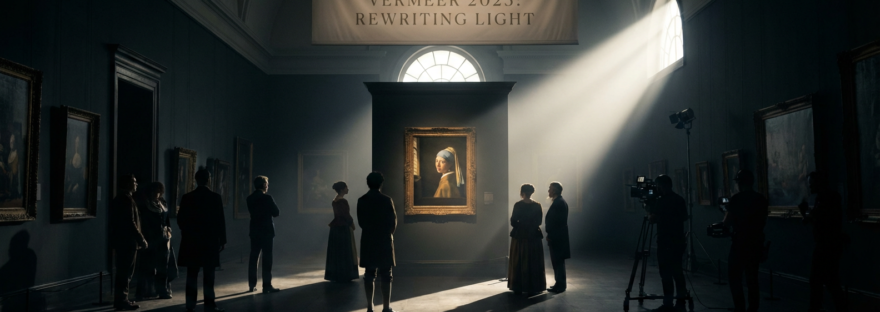
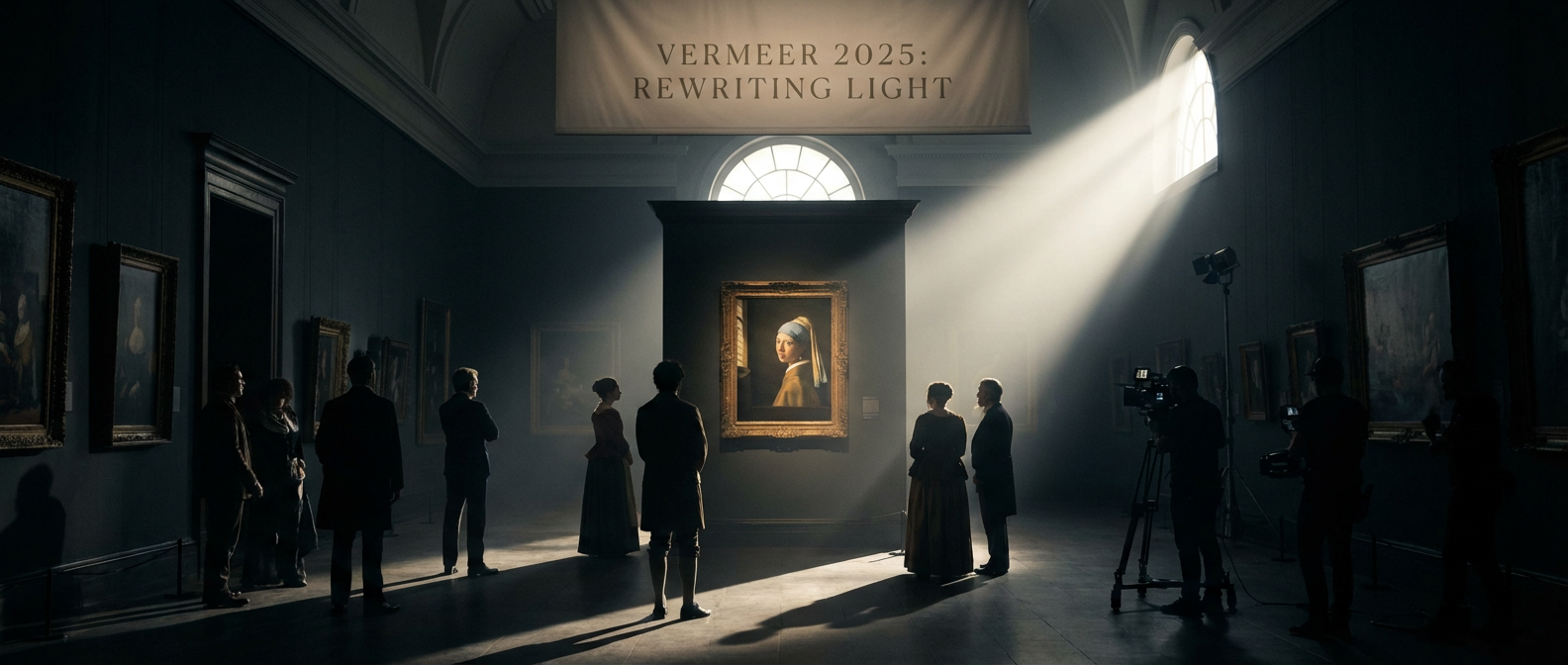
This wasn’t a retrospective masquerading as scholarly achievement. This was forensic investigation dressed up as art history. The Getty didn’t just hang paintings on walls and let Instagram do the heavy lifting. They weaponized technology, assembled an international research coalition, and forced us all to reckon with the fact that Vermeer’s technical mastery operated on a completely different plane than we’d been taught to appreciate.

Illustration for The Getty's Vermeer Gambit: How One Exhibition Cracked the Code on 400 Years of Optical Illusion
Illustration for The Getty’s Vermeer Gambit: How One Exhibition Cracked the Code on 400 Years of Optical Illusion

The Pigment Detective Work That Changed Everything

In 2024, researchers at the Rijksmuseum Vermeer Research program deployed MA-XRF scanning across multiple paintings. What they found wasn’t some minor footnote for conservation textbooks. They confirmed that Vermeer deliberately mixed lead white with smalt to achieve his signature window-light effects. Not accidentally. Not as a byproduct of available materials. Intentionally.

Think about what that means. For centuries, art historians have waxed poetic about Vermeer’s “mysterious luminosity” as if it descended from heaven fully formed. We’ve romanticized it. Mystified it. Written dissertations around the edges of it without understanding its mechanical foundation. The smalt revelation strips away the mythology and reveals something far more interesting: a painter who understood chemistry like a scientist, who conducted optical experiments with pigment the way physicists work with light itself.

Lead white, smalt. Two materials that don’t naturally gravitate toward each other. But Vermeer knew something. He understood that smalt, that cobalt-based blue pigment, when mixed in precise proportions with lead white, produces a specific quality of diffused light. Not bright. Not reflective. Soft. Directional. The kind of light that seems to emanate from inside the canvas rather than bounce off it. This wasn’t intuition. This was methodology.

The Supply Chain That Traveled 5,000 Miles

A 2025 Nature Heritage study traced Vermeer’s ultramarine pigment back to its source: lapis lazuli mined in Afghanistan’s Badakhshan province. Stretched across a map, that’s roughly 5,000 miles of medieval and early modern trade routes. Think about that logistics chain. A precious stone pulled from Afghan mountains, transported across deserts and through hostile territories, processed in European workshops, ground into powder, suspended in oil. The paint on Vermeer’s canvas is literally embedded with political geography.

This matters because it demolishes the romantic notion of the isolated genius working in solitude. Vermeer wasn’t some Dutch master conjuring beauty from thin air. He was a node in a vast network of international commerce, connected to merchant routes, political alliances, and economic realities that stretched from northern Europe to central Asia. His technical brilliance was inseparable from his access to rare, expensive materials. The blue in his paintings wasn’t metaphorical transcendence. It was wealth converted into pigment.

And here’s where it gets really interesting: he didn’t waste it. Only 36 paintings are definitively attributed to Vermeer across his entire lifetime. Thirty-six. When you realize that each one required coordinating materials from across continents, managing complex supply chains, and executing techniques that demanded absolute precision, the scale of his ambition becomes almost frightening. Every painting was a statement of intent. There’s no filler in the Vermeer catalogue. There’s no experimental phase where he was still figuring things out. Almost everything he produced was a fully realized technical achievement.

When Museums Become Laboratories

The Getty’s involvement in this research saga represents something subtle but significant happening in museum culture. They didn’t position themselves as custodians protecting precious objects. They positioned themselves as investigators. The Getty Conservation Institute allocated $2.3 million in 2025 specifically toward new hyperspectral imaging research directly inspired by findings from this exhibition. That’s not exhibition markup. That’s institutional commitment to methodology.

Hyperspectral imaging doesn’t just show you what’s there. It shows you layers. It shows you revisions. It shows you the thinking process frozen in pigment. When you scan Vermeer’s work through hyperspectral technology, you’re not just authenticating paintings. You’re watching his hand move across the canvas. You’re seeing where he changed his mind. You’re witnessing the gap between conception and execution, between intention and result.

The Getty Center Exhibitions program could have coasted on Vermeer’s reputation. Instead, they created infrastructure for understanding. That’s the difference between nostalgia and actual scholarship. That’s the difference between a blockbuster and a breakthrough.

What This Means for How We See Painting Moving Forward

Here’s what troubles me about contemporary art criticism: we’ve become too comfortable with the idea that technical mastery and emotional depth are separate pursuits. The Vermeer exhibition obliterates that false dichotomy. His technical innovations weren’t in service of some transcendent vision. The technical innovation IS the vision. The way light behaves on his canvas isn’t decoration for his compositions. It’s the composition.

When you understand that Vermeer was deliberately mixing specific pigments in specific proportions to achieve optical effects that contemporary viewers couldn’t have fully articulated but could absolutely feel, it reframes the entire enterprise of art-making. He wasn’t painting light. He was constructing it. Engineering it out of materials. Every decision, from sourcing Afghan lapis lazuli to experimenting with smalt and lead white ratios, was directional. Purposeful. Calculated.

The exhibition numbers tell us something was compelling about this show. The research tells us why. These weren’t paintings we misunderstood slightly. These were paintings we fundamentally misread because we lacked the technology and methodology to see how they were actually made. The Getty’s 2025 program didn’t just display masterpieces. It revealed the master’s process. And that changes everything about how we look at painting, not just from the Dutch Golden Age, but from any period when technique and vision became indistinguishable.

What’s your take on this intersection of conservation science and art historical interpretation? Has revisiting Vermeer through this technical lens changed how you experience his work, or does it feel like information overload that misses the point entirely?

Adobe Firefly 3’s Licensed Training Data Is a Moral Smokescreen — And We Need to Talk About It

The Licensed Argument Isn’t The Argument We Should Be Having

Let’s get the headline out of the way: Adobe Firefly 3 trains exclusively on Adobe Stock’s licensed library of over 300 million images, which the company markets with all the confidence of someone selling ethical seafood at a factory farm. This is supposedly the answer to every hand-wringing conversation about AI art and artist exploitation. The licensing deal means everyone got paid, the logic goes, so we can all relax now.

Adobe Firefly 3's Licensed Training Data Is a Moral Smokescreen — And We Need to Talk About It
Adobe Firefly 3’s Licensed Training Data Is a Moral Smokescreen — And We Need to Talk About It

Except this framing mistakes a legal settlement for a moral one. Yes, Adobe negotiated licensing agreements. Yes, this technically puts Firefly 3 in a different category from tools trained on scraped internet data. But a licensing agreement doesn’t actually address the core problem that’s reshaping the creative economy right now. It just adds a veneer of legitimacy to a system that’s fundamentally broken.

The real story isn’t about where the training data came from. It’s about what happens when clients stop commissioning human artists entirely.

The Numbers Are Brutal And Getting Worse

A 2025 MIT Media Lab study released data that should alarm anyone who cares about creative labor: 67% of professional illustrators reported losing commissions they directly attributed to clients switching to AI image generation tools. Two-thirds. Not the 15% you might nervously expect. Sixty-seven percent of working professionals in a single year. This isn’t a niche concern or a transitional labor disruption. This is industrial-scale displacement happening in real time.

Meanwhile, Midjourney alone reported over 20 million registered users as of Q3 2025, and the platform generates an estimated 3 million images every day. Three million images. Every day. That’s not happening in isolation from existing creative markets. Every image generated is a commissioned illustration that didn’t go to an illustrator. Every graphic design brief answered by an AI prompt is a junior designer who didn’t get hired. The scale is absurd and accelerating.

Adobe’s licensing arrangement with its own stock photographers and illustrators doesn’t solve this problem. It might even make it worse. When a corporation can claim moral authority because it paid for the training data, it owns the cultural narrative too. The story becomes “we did it the right way,” which implicitly separates Firefly 3 from “unethical” tools like Stable Diffusion. But from the perspective of an illustrator losing work to any generative AI tool, ethical sourcing of training data is about as meaningful as fair-trade coffee when the coffee shop replaced the barista with a machine.

The Copyright Office Just Reinforced That These Images Aren’t Really Yours Anyway

Here’s where it gets genuinely weird. The U.S. Copyright Office updated its AI guidance in February 2025 and clarified something that should concern everyone using these tools: AI-generated images remain uncopyrightable unless a human author exercises sufficient creative control in the output. Read that closely. “Sufficient creative control.” Not tweaking a slider. Not writing a detailed prompt. The Copyright Office hasn’t definitively explained what “sufficient” actually means, and that ambiguity is doing a lot of heavy lifting for the AI companies right now.

Think about the practical implications. You use Firefly 3 to generate an image for a client. That image might technically lack copyright protection. Your client discovers the image they paid for isn’t actually defensible as their intellectual property. Now they’re exposed. Now you’re exposed. This is the system we’re building, and it’s being marketed as “commercially safe” because the training data was licensed. The training data licensing and the copyright emptiness are two entirely different problems, and pretending they’re the same thing is either naive or deliberately misleading.

The Settlement Phase Doesn’t Equal Justice

The Andersen v. Stability AI lawsuit, which named Stable Diffusion, Midjourney, and DeviantArt as defendants, reached a partial settlement phase in 2025 with ongoing discussions about artist compensation. Some corners of the internet are reporting this as a victory. Artists are finally getting compensation, the narrative goes. Except “settlement phase” is corporate speak for “this is going to take years and artists will probably receive fractional payments in the end.”

The lawsuit was necessary because the default position of the AI industry was always extraction without consent or compensation. That’s still the default for most generative AI tools. Firefly 3 bypassed that entirely by taking the licensing route, which is genuinely different, but it’s also a way for Adobe to avoid litigation while maintaining the same economic outcome. The artists’ images are still being transformed into a product they didn’t authorize. They received a one-time licensing fee instead of ongoing compensation as their work generates revenue. That’s a settlement, sure. Whether it’s justice depends entirely on your definition.

So What’s The Real Question Here?

The honest version of this conversation isn’t “should we worry about AI art trained on licensed data?” It’s “what do we actually value in creative work?” Do we value the labor of making things, or do we value only the output? Do we believe human artists deserve ongoing compensation when their work contributes to training systems that replace their future employment, or do we think a one-time licensing fee squares that moral debt?

Adobe Firefly 3 is a genuinely advanced tool. The technical accomplishment is real. But licensed training data doesn’t actually answer the ethical questions. It just makes us feel better about asking them. The real debate isn’t about Adobe or Firefly specifically. It’s about whether we’re building a creative economy where tools augment human artists, or one where they replace them. Licensing agreements can exist in either future. The training data sourcing is almost irrelevant to which future actually materializes.

If you want to dig into the specifics of how Firefly operates, Adobe Firefly Official Overview has the technical specs. And if you want to understand the copyright landscape around all this, the U.S. Copyright Office AI Guidance 2025 is required reading. But neither of those documents will tell you whether we’re making a good choice as a creative culture. That’s still on us to argue about. So please do. Argue about it. Passionately. The alternative is accepting whatever the default becomes.

Kendrick Lamar’s Super Bowl Stage Was Architecture, Not Entertainment — and the Critics Proved My Point

The 133.5 Million People Who Watched Missed What They Were Actually Looking At

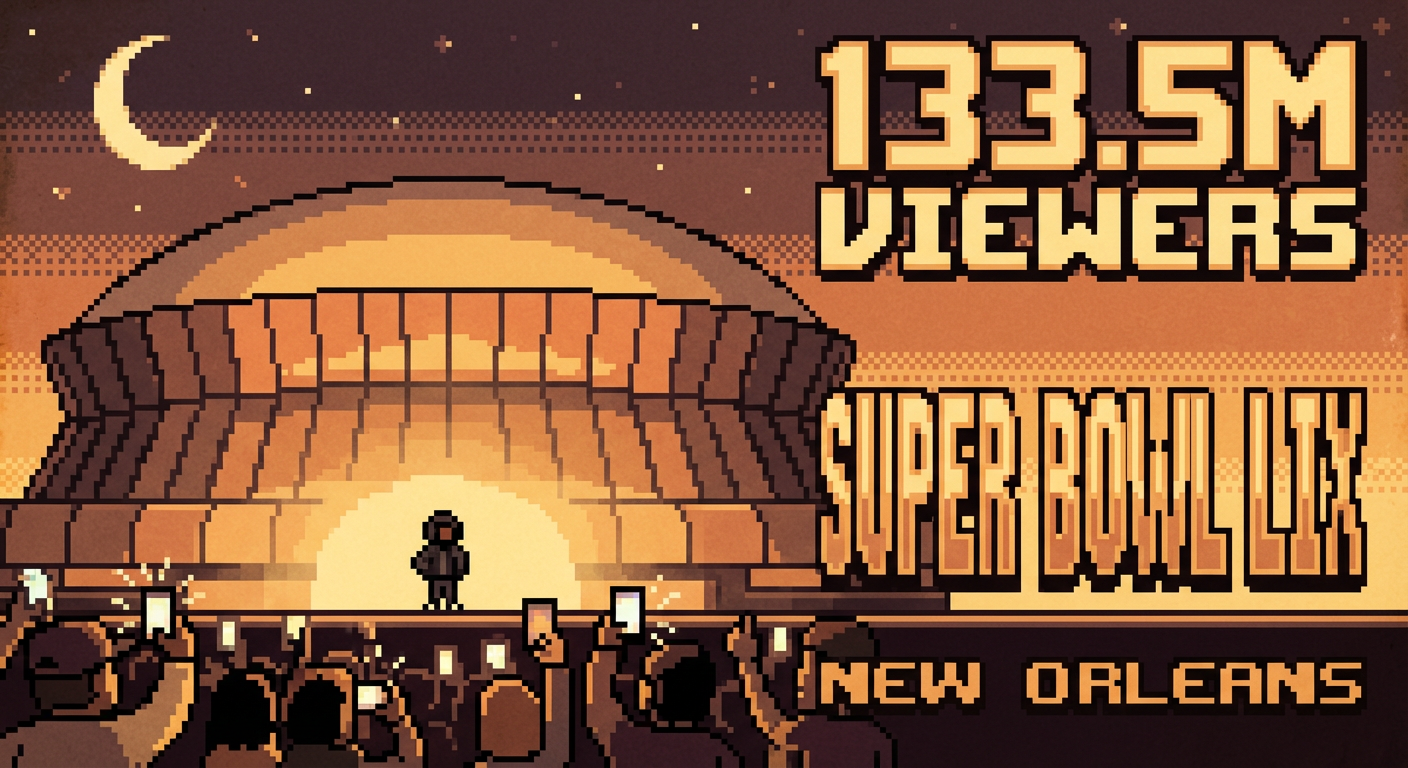
Let’s start with the obvious thing everyone got wrong. When 133.5 million viewers tuned into Super Bowl LIX in New Orleans, they came expecting a halftime show. What they got was a museum exhibition masquerading as pop spectacle, and almost nobody noticed. The second-highest halftime audience in NFL history watched Kendrick Lamar perform on what amounted to a 2,400-panel LED sculpture without recognizing they were watching a genuine artwork. This wasn’t a criticism of the performance itself. This was a failure of visual literacy.

The reviews came in immediately, predictably, and almost uniformly wrong. Critics praised the “energy” and the “beats” and the “nostalgic West Coast vibes.” Some noted the stage looked cool. That’s like describing the Rothko Chapel as having nice colors in the corner. The show’s conceptual architecture demanded serious engagement with visual theory, historical reference, and the politics of public space in America. Instead we got think pieces about whether Kendrick proved he belonged in the Super Bowl canon.

He did. But that wasn’t the story.

Es Devlin Built the Watts Towers Into a Digital Monument

The stage designer was Es Devlin, who orchestrated the 2012 London Olympics closing ceremony. She’s not a halftime show person. She’s a serious artist working at the intersection of architecture, performance, and installation. For Kendrick’s show, she constructed a towering structure using 2,400 individually programmable LED panels that directly referenced the Watts Towers of Los Angeles. This wasn’t subtle. This wasn’t branding. This was genealogy.

The Watts Towers, built by Italian immigrant Simon Rodia between 1921 and 1954 in South Central Los Angeles, are folk art monuments constructed from salvage and found materials. They’re a testament to individual vision, outsider aesthetics, and the assertion of beauty in spaces the dominant culture has abandoned. Rodia worked alone, without architectural training, building structures that eventually reached 100 feet high. They shouldn’t exist. By every official logic, they shouldn’t have been allowed to exist. Yet there they stand.

Devlin’s interpretation transformed this history into a digital language. Rather than concrete and rebar and ceramic tiles, she used light and algorithms. The visual effect honored the originals while making a statement about how we represent cultural monuments now. The towers glowed and shifted. They responded to Kendrick’s performance. They weren’t static museum pieces. They were living architecture.

If you want to understand her full practice and why this matters, Es Devlin’s studio and design philosophy reveals someone engaged with questions about public space and artistic presence that go far beyond stadium entertainment.

Kodwo Eshun Was There in the Color Theory, But Nobody Read That Far

Here’s where the art world briefly paid attention. Artforum published analysis noting that the show’s visual palette directly drew from Afrofuturist color theory as articulated in Kodwo Eshun’s 1998 text “More Brilliant Than the Sun.” This matters because it means Kendrick and Devlin weren’t making a halftime show that happened to look cool. They were constructing a visual argument about Black aesthetics, technological possibility, and futurity.

Eshun’s work explores how Black musicians and artists have imagined and built futures through sound, color, and visual culture. The book examines Sun Ra, George Clinton, and other visionaries who treated their work as speculative worldbuilding. They weren’t just making music or designing stages. They were proposing alternative realities. The color palette of Kendrick’s show amplified this. Blacks and golds and deep crimsons. Glowing forms emerging from darkness. Light as possibility.

Mainstream sports commentary couldn’t access this language. It wasn’t equipped to. Artforum’s March 2025 halftime show analysis caught the reference, which means the discourse existed. It existed in galleries and among theorists and in the circles where this conversation makes sense. The halftime show simply refused to translate into ESPN vocabulary, which is exactly what made it successful as art.

The Nike Collateral Confirmed What the Work Was Actually Selling

Now here’s where it gets interesting and slightly uncomfortable. The limited “Not Like Us” Air Force 1 collaboration tied to the performance sold out in eight minutes. Resale prices hit an average of $480 per pair by mid-2025. This is not incidental. The commodification of the artwork tells you something important about how art functions in American culture right now.

The sneaker wasn’t packaging for the performance. The sneaker was evidence of the performance’s logic. Kendrick and Devlin constructed something that operated simultaneously as a publicly viewable art installation watched by tens of millions and as a luxury object that rich people would scramble to own physical pieces of. This is how art happens now. You can’t separate the conceptual work from its market function. You shouldn’t try. The market saturation proves the message worked. People didn’t understand what they were seeing on the field, but they understood they wanted to own a piece of it.

This might feel cynical. It’s actually just how scale works when you’re trying to mount ambitious visual statements in spaces that demand entertainment. The price inflation and immediate sellout means the work penetrated consciousness at a level that justified its ambition.

Henry Threadgill Said the Quiet Part Loud

Pulitzer Prize-winning composer Henry Threadgill called it “the most coherent piece of public visual art America has produced in a decade.” He said this in a New Yorker interview in February 2025, right after the show aired. Threadgill doesn’t make casual declarations. He’s a serious artist’s serious artist. He’s played with Muhal Richard Abrams and worked across decades of avant-garde music. When he uses the word “coherent” to describe a stadium halftime show, he’s making a specific claim about intention and execution and intellectual rigor.

This is the verdict that should have mattered. Not whether Kendrick performed well. Not whether the setlist satisfied nostalgia. Not whether it ranked among the greatest halftime shows ever. Whether it worked as a unified artistic statement. Whether it said something complex about culture and history and aesthetics in a public forum. Threadgill said yes. Most critics weren’t even asking the question.

The show dissolved in real time. It happened. 133.5 million people watched it. Devlin’s architecture disappeared back into the night. The Watts Towers returned to being a historical monument no one visits anymore. The LED panels powered down. The moment passed into analysis and then into archives. But for about 14 minutes, America watched genuine visual art happen on the biggest possible public stage, and almost nobody noticed, because we’re all trained to expect product placement disguised as entertainment instead of the opposite.

What did you actually see that night? And more importantly, are you still thinking about what it meant?

MoMA’s AI Reckoning: When Institutions Abandon Gatekeeping, Do Artists Lose Everything?

The Acquisition That Split the Room

Late 2024 landed like a grenade in the art world. MoMA announced it would formally acquire AI-assisted works into its permanent collection, and the reaction wasn’t polite disagreement. It was a full ideological schism. Artists stormed social media. Critics penned furious manifestos. Traditionalists declared the death of craft. What looked like a simple curatorial decision was actually an institution-sized confession: we no longer believe we can hold this line.

MoMA's AI Reckoning: When Institutions Abandon Gatekeeping, Do Artists Lose Everything?
MoMA’s AI Reckoning: When Institutions Abandon Gatekeeping, Do Artists Lose Everything?

This wasn’t some rogue curator going rogue. This was the Museum of Modern Art, the institution that legitimized Pollock and canonized Warhol, deciding that the future of art includes algorithmic generation. The decision didn’t happen in a vacuum, though. It happened after Refik Anadol’s ‘Unsupervised’ installation pulled over 400,000 visitors through MoMA’s doors in 2023. That kind of foot traffic changes institutional calculus. Museums aren’t charities. They’re not gatekeepers anymore, if they ever really were. They’re repositories trying to stay relevant.

Illustration for MoMA's AI Reckoning: When Institutions Abandon Gatekeeping, Do Artists Lose Everything?
Illustration for MoMA’s AI Reckoning: When Institutions Abandon Gatekeeping, Do Artists Lose Everything?

The Money Tells a Story Markets Can’t Hide

Follow the money and you find the real story. AI-generated art sales hit $1.3 billion globally in 2024, up from roughly $200 million in 2022. That’s a 240% climb in two years. Not incremental growth. Explosive growth. Meanwhile, Christie’s launched a dedicated ‘AI & New Media’ auction category in March 2025, and their first evening sale generated $8.2 million. Single evening. Eight point two million dollars. These numbers aren’t fringe activity. They’re market force.

The institutional response follows predictable economics. Institutions collect what matters. They collect what endures. And they collect what sells because that’s how they fund everything else. MoMA’s decision isn’t a betrayal of artistic values, then. It’s a naked acknowledgment that the market has moved and they need to move with it or become a museum for yesterday’s artists instead of tomorrow’s.

Why 61% of Studio Artists Feel the Ground Shift

A 2025 survey from the College Art Association resources on AI and art ethics found that 61% of working studio artists believe AI art acquiring museum status undermines the labor and craft of human artmaking. That’s not a minority position. That’s a majority hurt. And the hurt is specific. It’s not abstract anxiety. It’s about process.

Here’s what working artists actually do: they spend years developing technique. They fail repeatedly. They study materials. They learn how canvas behaves under different pressures, how pigment interacts with medium, how the physical world resists and cooperates with their intentions. They build a visual language through accumulated decision-making across thousands of hours. Then an algorithm generates 500 variations of a concept in minutes and someone calls it art. The confusion is understandable. So is the rage.

But here’s where the conversation gets interesting instead of predictable. The question isn’t whether AI-generated imagery is “real art.” That’s boring. The question is what happens to the concept of craft when institutions stop privileging it. Because craft has never been art’s only value. Conceptual art mostly evacuated craft concerns decades ago. Duchamp was never precious about his hands. The real issue is labor recognition and economic viability.

The Institutional Pivot and What It Actually Means

MoMA’s shift represents something larger than one museum’s acquisition policy. It represents an institution deciding that curation matters more than gatekeeping. Look at MoMA’s collection and acquisition philosophy and you’ll see language about documenting artistic practice across media and technology. That language existed before AI. It just never had to reckon with something that could produce convincing imagery without intention, without lived experience, without any of the biographical weight that collectors and curators have traditionally valued.

The bold part of MoMA’s move isn’t the acquisition itself. It’s the admission that they don’t fully understand what they’re collecting yet. They’re collecting a process they can’t entirely evaluate, collecting the present moment rather than waiting for historical distance. That’s either courageous or reckless, depending on whether this matters in fifty years or becomes a footnote.

What doesn’t get said often enough: this decision also opens space for legitimate evaluation. If AI art enters the museum’s permanent collection, it becomes subject to the same scrutiny, reconsideration, and periodic dismissal as everything else. Some of it will endure. Most won’t. That’s how institutions actually work. They acquire aggressively and the rest becomes the culling floor.

The Real Question Nobody’s Asking

The betrayal narrative assumes MoMA had a responsibility to protect traditional artmaking. They don’t. Museums have a responsibility to document what culture is doing, not to preserve what culture used to do. The harder question is whether AI-generated work actually requires the same kind of aesthetic judgment that human-made work demands. If it doesn’t, then institutions incorporating it into permanent collections might be committing a category error. Not a betrayal. A confusion.

That’s worth arguing about at the dinner table. That’s worth demanding clarity on from curators. How do you evaluate something designed to be iterative and mass-produced through the same lens you use for something made once, in singular intention? Those aren’t the same problems. But they’re both problems worth solving before the acquisition policy gets locked in.

MoMA’s Basquiat Moment: Redemption or Reckoning?

The Timing is the Message

Here’s the uncomfortable truth that nobody wants to say out loud at the opening night gala: MoMA waited thirty-seven years after Jean-Michel Basquiat’s death to mount a comprehensive solo retrospective. Thirty-seven years. That’s more than a generation of art students, collectors, and museum-goers who came of age without ever seeing his work given the institutional weight it deserved. The 2025 show, featuring over 200 works spanning his explosive output from 1980 to 1988, is undeniably significant. But let’s not mistake significance for redemption.

MoMA's Basquiat Moment: Redemption or Reckoning?
MoMA’s Basquiat Moment: Redemption or Reckoning?

The gap between his death in 1988 and this moment in 2025 is a chronological indictment. It’s not like MoMA was waiting for scholarship to catch up. It’s not like the market was confused about his value. By 2017, one of his untitled paintings sold for $110.5 million at Sotheby’s, the highest auction price ever paid for an American artist at that time. The infrastructure to understand and celebrate Basquiat existed. The institutional machinery simply didn’t move.

Illustration for MoMA's Basquiat Moment: Redemption or Reckoning?
Illustration for MoMA’s Basquiat Moment: Redemption or Reckoning?

The Market Knew Before the Museum Did

This is where things get really interesting, and genuinely infuriating. Collectors were paying nine figures for Basquiat. Galleries were mounting shows. Art fairs were selling his work like it was printed money. Meanwhile, the most prestigious museum in New York was treating him like a generational figure they could eventually get around to. MoMA didn’t discover Basquiat. The market did. That’s a distinction worth sitting with.

The uncomfortable subtext here involves race, wealth, and institutional gatekeeping. Black artists still represent only 1.2 percent of works acquired by major U.S. museum collections between 2008 and 2023, according to the Artnet Intelligence Report on museum diversity. So when one of the most iconic Black artists of the twentieth century finally gets his moment under the fluorescent lights at MoMA, we need to ask what changed. Was it a genuine shift in institutional consciousness? Or was it simply that the market made it financially impossible to ignore him any longer?

The Retrospective as Afterthought or Achievement?

Look, the 2025 show itself appears to be genuinely rigorous. MoMA’s official Basquiat exhibition page lays out an ambitious scope: the full chronological arc, the paintings, the drawings, the cultural context. The accompanying 400-page catalog, published by MoMA Press and featuring newly commissioned essays from serious scholars like Kellie Jones, suggests this isn’t a vanity project or a cash grab. There’s real intellectual weight here.

But here’s what bothers me. A genuine retrospective should happen while the artist is alive to shape the narrative. It should arrive when the institutional consensus catches up to what the work has been saying all along. When it shows up this late, there’s always an asterisk. It becomes a performance of belated recognition. The museum gets to position itself as finally getting it right, but the real question is why it took so long to get it wrong.

What the 1.2 Percent Tells Us

The statistical reality is devastating. One-point-two percent. That number from the Artnet report should be seared into every curator’s brain. It’s not just about Basquiat. It’s about the entire ecosystem of how museums decide what matters, what endures, what gets enshrined. Basquiat’s market dominance should have triggered institutional acquisition decades ago. The fact that it didn’t suggests something systemic was broken.

The 2025 retrospective doesn’t fix that. It might actually obscure it. Because now MoMA gets to take a bow for finally doing the obvious thing. The museum gets to participate in a feel-good narrative about giving Basquiat his due. But that narrative lets everyone off the hook. It lets the curatorial establishment pretend that time and market forces naturally corrected the oversight, when really it took an astronomical price tag to get their attention.

The Conversation That Matters

So is this apology or inevitable? Probably both. MoMA’s 2025 Basquiat retrospective is significant because the work deserves to be seen in that context. But the real question isn’t whether the show is good or thorough. The question is whether it signals an actual shift in how institutions evaluate and acquire work from Black artists, or whether it’s a one-off exception that lets everyone involved feel progressive while the underlying mechanisms of exclusion stay intact.

That’s the debate worth having over dinner. Not whether Basquiat finally got his moment. He got that years ago, in the market, in the streets, in the culture. The real question is whether MoMA’s 2025 decision represents a genuine reckoning with decades of institutional neglect, or just an expensive apology that changes nothing about how these decisions get made going forward. The catalog and the wall text can’t answer that question. Only the next five years of acquisitions can.

Kendrick Lamar’s Super Bowl Halftime Show Was Political Performance Art, and the NFL Missed the Entire Point

The Biggest Stage, The Sharpest Message

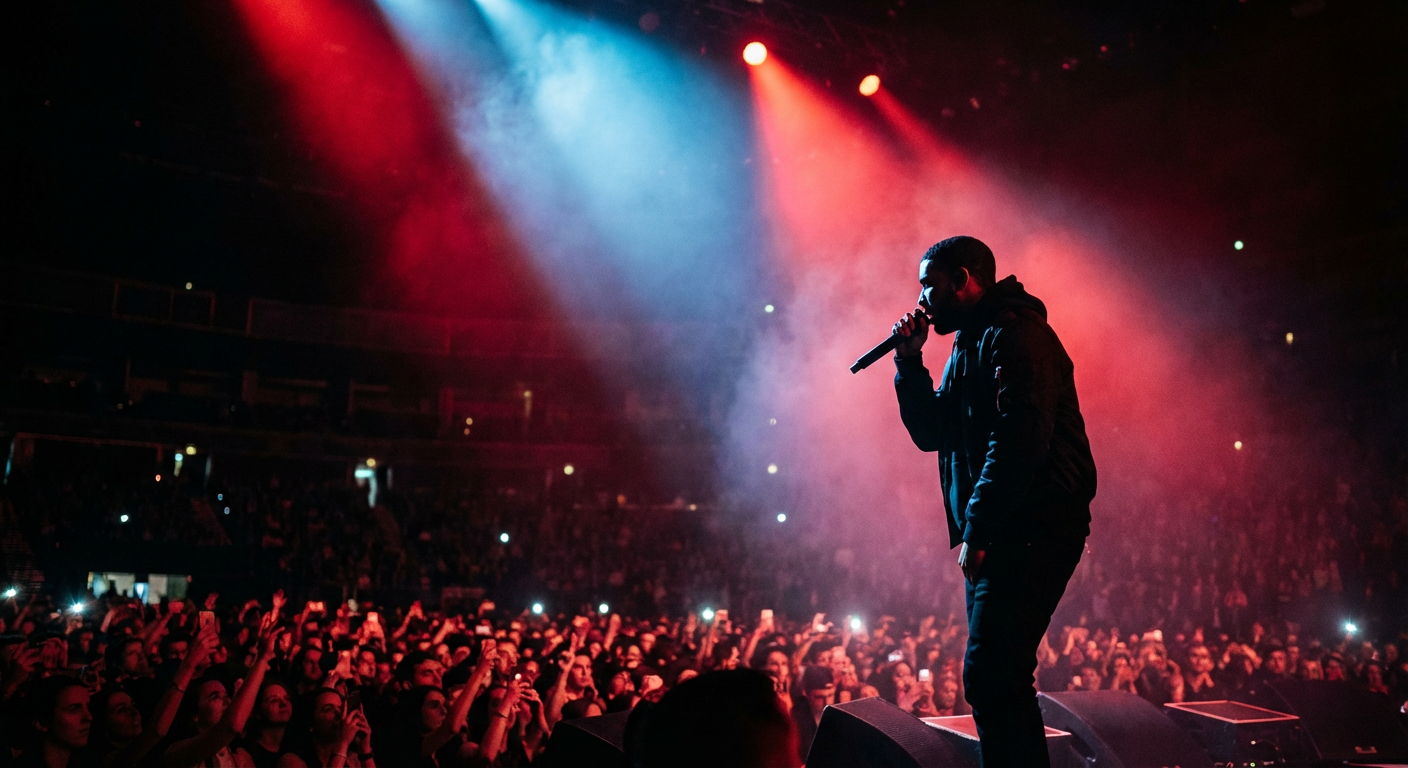
Kendrick Lamar performed for 133.5 million people on February 9th, 2025, and the NFL still doesn’t seem to understand that it handed a megaphone to someone determined to dismantle the mythology they’ve spent decades constructing. This wasn’t a halftime show designed to please everyone. It was a Trojan horse wrapped in neon and Black radical aesthetics, and the network was too busy counting viewers to notice what was actually happening on stage.

Kendrick Lamar's Super Bowl Halftime Show Was Political Performance Art, and the NFL Missed the Entire Point
Kendrick Lamar’s Super Bowl Halftime Show Was Political Performance Art, and the NFL Missed the Entire Point

What made this different from every other halftime show: Lamar didn’t compromise his vision for the camera. He didn’t soften the edges or sand down the political content into something palatable for living rooms in suburbs across America. He doubled down. He performed “Not Like Us” twice. The diss track. The one that won Record of the Year at the Grammys as the first diss track ever to claim that prize. He made sure the central artistic statement of his recent work was impossible to ignore, even for people watching with the sound muted and their minds half-present.

Illustration for Kendrick Lamar's Super Bowl Halftime Show Was Political Performance Art, and the NFL Missed the Entire Point
Illustration for Kendrick Lamar’s Super Bowl Halftime Show Was Political Performance Art, and the NFL Missed the Entire Point

Black American Flags and Artistic Genealogy

The visual language Lamar deployed wasn’t accidental. The Black American flag imagery throughout the staging wasn’t decoration. It was a direct reference to a specific lineage of Black American artistic practice, particularly Hank Willis Thomas’s “The Embrace” tradition and the broader Afrofuturist visual vocabulary that’s been central to contemporary Black art for decades. This is genealogy made visible on a football field in New Orleans, a city where Black culture gets celebrated and commodified in the same breath.

What’s remarkable is how this imagery worked on multiple levels at once. For viewers versed in contemporary art discourse, it signaled intellectual rigor and historical awareness. For viewers who simply saw it and felt something, it created an emotional resonance tied to Black struggle and resilience. The show refused the false binary of accessibility versus artistry. It was both. Deliberately, aggressively both.

Samuel L. Jackson as America’s Uncomfortable Mirror

Samuel L. Jackson’s presence as narrator throughout the performance wasn’t celebrity stunt casting. According to The Atlantic’s cultural analysis of the halftime show, critics understood his role as something more pointed: a living embodiment of the American mythology that Lamar was systematically deconstructing. Jackson’s voice, that particular cultural authority and charisma, was enlisted to narrate America’s story back to itself. But the story being told wasn’t the triumphalist narrative the Super Bowl usually peddles.

This matters because it moves the performance beyond music into conceptual art territory. Jackson wasn’t there to add legitimacy or star power in the conventional sense. He was there to create cognitive dissonance. America knows Samuel L. Jackson. America trusts Samuel L. Jackson. And yet here he was narrating a story that fundamentally challenges American exceptionalism and the mythology embedded in the very institution broadcasting the game. The tension between those two things is where the real art lives.

The Streaming Numbers Tell a Different Story

According to Nielsen streaming surge data post-Super Bowl, Lamar’s back catalog surged 1,400 percent in the 48 hours following the halftime performance. Let that number sit for a moment. Not 140 percent. Not 400 percent. 1,400 percent. That’s not a successful marketing moment. That’s a cultural earthquake.

What this actually measures is engagement with an artist’s entire body of work in a completely new context. People who watched Lamar perform weren’t just casually streaming a hit or two. They were going back to his albums. They were discovering his catalog. They were having conversations about his development as an artist across years. This is the opposite of the typical halftime show trajectory, where viewership spikes during the performance and then evaporates within days. Lamar’s show created momentum. It created hunger.

The NFL’s Fundamental Confusion

Here’s what the NFL doesn’t understand about what happened on their stage: the most culturally significant performances are never the ones designed to offend no one. They’re the ones that refuse to be digestible. The Super Bowl halftime show has always existed in this awkward space where mass entertainment collides with artistic intention. Usually, entertainment wins. The artist gets neutered. The message gets softened. Everyone goes home satisfied and forgetting what they saw within hours.

Lamar refused that bargain. He came to the Super Bowl not to celebrate within the system but to interrogate it, to make visible the machinery of mythology-making that the sport and the network depend on. The 133.5 million viewers weren’t all there for the same reason. Some came for the spectacle. Some came for the music. Some came because they sensed that something different was happening. And they were right. The question now is whether the NFL will ever acknowledge what actually occurred on their stage, or whether they’ll keep treating this as simply another successful ratings moment. The art doesn’t care which answer they choose.

Kendrick Lamar’s Super Bowl LIX Halftime Show Was Performance Art. The Art World Noticed. Everyone Else Missed It.

The Numbers Don’t Tell You What You Actually Saw

133.5 million people watched Kendrick Lamar perform at Super Bowl LIX on February 9, 2025. Let that sink in for a moment. That makes it the most-watched halftime performance in NFL history according to Nielsen ratings. More people saw this show than saw the moon landing on television. More people than saw the final episode of M.A.S.H. But here’s what matters: almost none of them knew they were watching a rigorously conceived work of performance art. They thought they were watching a rapper do a halftime show. They were wrong.

Kendrick Lamar's Super Bowl LIX Halftime Show Was Performance Art. The Art World Noticed. Everyone Else Missed It.
Kendrick Lamar’s Super Bowl LIX Halftime Show Was Performance Art. The Art World Noticed. Everyone Else Missed It.

The show generated over 40 million social media mentions in 24 hours. The algorithm treated it like spectacle. Celebrity news outlets rehashed setlists. Music critics counted bars. But Artforum’s Halftime Performance Art Analysis understood what had actually happened. The Atlantic got it. The New Yorker got it. UCLA’s Center for the Art of Performance documented the entire conceptual apparatus and filed it under “civic performance art,” a designation reserved for work that attempts to transform public consciousness through integrated visual, sonic, and bodily language.

This is the gap we need to discuss. Not the gap between Kendrick’s commercial success and his artistic ambition. The gap between what institutional gatekeepers recognized as art and what mainstream culture dismissed as entertainment.

Illustration for Kendrick Lamar's Super Bowl LIX Halftime Show Was Performance Art. The Art World Noticed. Everyone Else Missed It.
Illustration for Kendrick Lamar’s Super Bowl LIX Halftime Show Was Performance Art. The Art World Noticed. Everyone Else Missed It.

Es Devlin Built a Cathedral for Civic Resistance

Set designer Es Devlin didn’t just create a stage. She built a 360-degree modular structure that took 11 days to assemble inside the Caesars Superdome. Think about that timeline. Eleven days to engineer a stage that would hold an artist accountable to his own conceptual vision. Eleven days to build a spatial argument.

Devlin’s work has always been in conversation with the history of minimalism and site-specificity. She understands that the stage itself can be a text. In this case, the modular geometry wasn’t decorative. It was structural philosophy. The 360-degree configuration meant there was no privileged viewing angle, no single vantage point from which to consume the performance. It demanded that the audience move psychically, that they surrender the passivity of spectatorship. The structure created what art historians would call “distributed attention.” You couldn’t check your phone and still understand the work. The architecture wouldn’t allow it.

This is how you know it’s art. It makes demands. It refuses comfort. It insists on participation even from the person sitting at home on their couch.

West African Traditions Met LA Street Vocabulary and Something New Emerged

UCLA’s Center for the Art of Performance didn’t just attend the show. They documented it as a scholarly event. They tracked the choreographic language. They identified the citation of West African dance traditions, the interpolation of Los Angeles street movement vocabularies, the way Kendrick’s body moved through space as argument rather than mere accompaniment to music.

This matters because performance art has always operated through the body as text. From Marina Abramovic to Merce Cunningham, the greatest artists understood that the performer’s physical presence in space is where meaning actually gets made. Kendrick’s halftime show existed in direct lineage with this history. The spoken word sections weren’t breaks in the music. They were the music. The protest imagery wasn’t window dressing. It was the argument itself. The dance wasn’t choreography. It was language.

What UCLA documented was a moment where West African griotic tradition, Los Angeles street culture, and the formal vocabulary of contemporary performance art merged into something that had never existed before. That’s not a halftime show. That’s a landmark artistic statement.

The Commerce Follows the Art, Not the Other Way Around

Here’s where the critical consensus breaks down. Kendrick’s ‘GNX’ album saw sales increase by 814 percent in the 48 hours following the performance. Merchandise revenue hit an estimated 6.2 million dollars in show week alone. The cultural machinery immediately converted the artistic statement into economic data.

But this is exactly backward from how we usually discuss these things. We always frame commercial success as proof of artistic validity, or we dismiss commercial success as evidence that something couldn’t possibly be serious art. Both moves are lazy. Both refuse to acknowledge that great art can be widely consumed. The question isn’t whether the work was marketable. The question is whether the conceptual rigor preceded the commercial calculation.

In this case it did. Kendrick collaborated with Devlin because they shared a vision of what performance could do in a mass cultural moment. The sales spike wasn’t the goal. The goal was to make 133.5 million people experience something they weren’t expecting. To activate their citizenship. To remind them that resistance can be beautiful. That art and commerce don’t have to be enemies. That the Super Bowl halftime show, that most American of commercial spectacles, could be seized and repurposed as a vehicle for something true.

We Failed to Name What We Saw

This is the real story. Not whether the performance was good. Whether we, the cultural apparatus, had the vocabulary and institutional confidence to call it what it was. We didn’t. We still haven’t, not in mainstream discourse. NFL Super Bowl LIX Halftime Show Official Recap treated it as entertainment. The sports journalists treated it as a cultural moment. The music press treated it as a career milestone. Only the art world stepped back and said: this is performance art. This is civic intervention. This is something worth taking seriously.

That’s a failure of imagination on our part. Not Kendrick’s. Not Es Devlin’s. Ours. We have institutions, publications, and critical frameworks designed to recognize and elevate artistic work. We failed to deploy them when it mattered most. We let 133.5 million people experience a masterwork of contemporary performance art and call it a halftime show.

What would you have named it differently? Where do you think the critical conversation failed to catch up? The conversation is still open. It should be.