Why Most “Cross-Medium” Art Projects Are Just Expensive Masturbation

The Seductive Lie of Interdisciplinary Genius

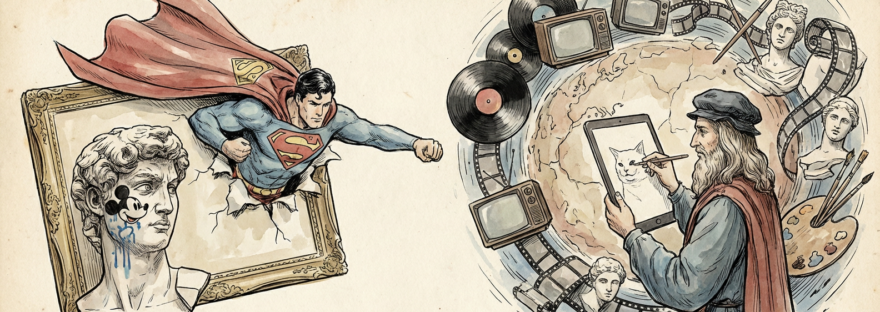
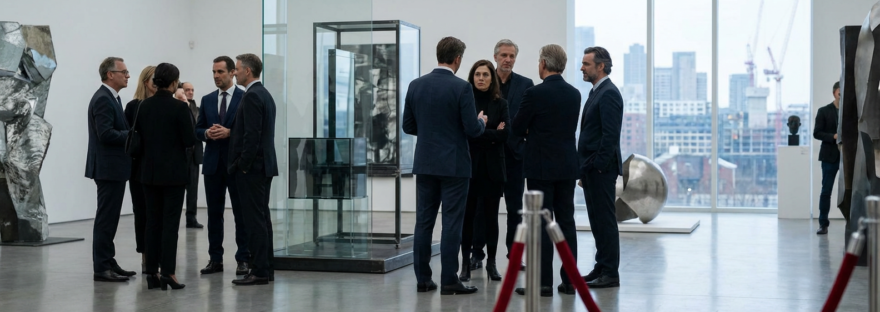
Every month, another gallery announces its latest multimedia installation. A painter collaborates with a composer. A filmmaker teams up with a choreographer. The press releases practically vibrate with self-importance, promising transcendent experiences that blur the boundaries between artistic forms. What we usually get instead is a confused mess where neither medium does what it does best.

Why Most "Cross-Medium" Art Projects Are Just Expensive Masturbation

The problem isn’t collaboration itself. The problem is that most artists approach cross-medium work like tourists in each other’s countries, speaking loudly and slowly while missing the entire point. When Laurie Anderson created “United States Live” in the early 1980s, she wasn’t just adding music to spoken word or visuals to sound. She was creating a new language that could only exist in the intersection. Most contemporary attempts feel like elaborate PowerPoint presentations with pretensions.

True interdisciplinary work requires each artist to give up something fundamental about their practice. It demands genuine vulnerability, not just the sharing of studio space and Instagram handles. The current trend of slapping different mediums together and calling it innovative collaboration is intellectual laziness dressed up in grant-friendly language.

Illustration for Why Most "Cross-Medium" Art Projects Are Just Expensive Masturbation

When Ego Gets in the Way of Art

Watch any documentary about failed collaborative projects and you’ll see the same pattern. Artists who can’t shut up about their “vision” long enough to listen. The painter who insists the dancers must move according to the rhythm of their brushstrokes. The musician who treats the filmmaker like a glorified music video director. These aren’t collaborations, they’re hostile takeovers with multiple casualties.

Look at the disaster that was Robert Wilson and Philip Glass’s early attempts before “Einstein on the Beach.” Wilson, with his glacial theatrical pacing, and Glass, with his relentless minimalist cycles, should have been incompatible. Instead of forcing compromise, they found a third space where time itself became sculptural. The opera doesn’t feel like theater with music or music with staging. It feels like witnessing the birth of a new art form.

Compare that to the countless gallery shows where painters “collaborate” with sound artists by literally hanging paintings next to speakers. The visual work doesn’t inform the audio. The audio doesn’t transform how we see the paintings. They just coexist, like roommates who split the rent but never speak. This isn’t synthesis, it’s expensive interior decorating.

The Mythology of Pure Mediums

Part of the problem comes from a fundamental misunderstanding of what artistic mediums actually are. We’ve mythologized the idea that painting, sculpture, music, and dance exist in pristine isolation. This is historical nonsense. Medieval manuscripts were multimedia projects. Renaissance frescoes were immersive environments that combined architecture, painting, and often music during their viewing. The separation of artistic disciplines is a relatively recent academic invention.

Even photography, which we treat as a distinct medium, began as painting’s bastard child and evolved by stealing techniques from printmaking, theater, and literature. Cindy Sherman’s “Untitled Film Stills” work because she understands that photography was always already collaborative with performance, costume design, and narrative construction. She doesn’t add these elements, she reveals them.

The most successful cross-medium projects acknowledge this historical reality. They don’t try to bridge separate worlds, they dig up the connections that were always there. When Maya Deren collaborated with Marcel Duchamp and John Cage on “At Land,” she wasn’t creating an unprecedented hybrid. She was making visible the surrealist undercurrents that already flowed through experimental film, conceptual art, and chance-based composition.

The Economics of Authentic Collaboration

Money ruins everything, but it especially ruins artistic collaboration. Grant committees love interdisciplinary projects because they sound innovative and inclusive. Galleries love them because they can charge higher prices for “unique” experiences. Artists love them because they can split costs and share audiences. Everyone wins except the art itself.

Real collaboration takes time. Obscene amounts of time. Anderson and Cronenberg spent two years developing “Delusion Angel” before they even started filming. They had to learn each other’s languages, discover shared obsessions, and figure out what they could create together that neither could make alone. Most contemporary collaborative projects operate on quarterly timelines dictated by exhibition schedules and funding cycles.

The result is art that looks collaborative but functions as a series of compromises. The painter reduces their palette to accommodate the lighting requirements. The composer simplifies their arrangements to match the gallery’s sound system limitations. The choreographer choreographs around the sculptures instead of with them. Everyone adjusts their practice downward to meet in a pleasant middle ground that challenges no one.

True collaboration requires artists willing to risk failure, institutions willing to wait for results, and audiences willing to encounter something genuinely unfamiliar. These conditions are becoming increasingly rare in a cultural economy that demands immediate, quantifiable returns on creative investment.

Finding the Friction Points

The most exciting collaborative work happens when artists deliberately seek out incompatibilities. When Merce Cunningham worked with John Cage, they specifically avoided coordinating their efforts. The dance and music coexisted in the same time and space but followed independent logics. The friction between these parallel systems created a third experience that belonged fully to neither dance nor music.

This approach requires confidence that borders on arrogance. Each artist must trust their own practice enough to let it collide with someone else’s without trying to control the outcome. It’s the difference between a conversation and a lecture. Most collaborative projects feel like two people giving simultaneous lectures in the same room.

The best cross-medium work I’ve encountered recently was an unmarked collaboration between a sound artist and a perfumer in a Detroit warehouse. Visitors couldn’t tell where one artist’s work ended and the other’s began. The scents seemed to have rhythm. The sounds seemed to have molecular weight. It wasn’t documented, wasn’t funded, and lasted exactly one weekend. It was also more genuinely innovative than most museum exhibitions I’ve seen this year.

Maybe that’s the point. Real collaboration can’t be institutionalized or optimized. It emerges from genuine curiosity about what happens when different ways of thinking rub against each other until sparks fly. The sparks can’t be planned, purchased, or predicted. They just have to be trusted. What collaborations have you encountered that actually changed how you think about what art can do?

Why Experimental Cinema’s Greatest Threat Isn’t Studio Executives — It’s Its Own Mythmaking

The Underground That Forgot It Was Already Above Ground

Last month at the Anthology Film Archives, I watched a room full of film students reverently discuss Maya Deren’s “Meshes of the Afternoon” as if it were some forbidden text discovered in a basement vault. Meanwhile, the same 16-minute film has been streaming on multiple platforms, assigned in hundreds of college courses, and referenced in countless music videos. This disconnect reveals experimental cinema’s strangest paradox: a movement so invested in its outsider mythology that it actively obscures its own influence on mainstream culture.

The problem isn’t that experimental films have become accessible. It’s that we’ve built such an elaborate cult around their supposed inaccessibility that we’ve stopped seeing how deeply they’ve penetrated everything from TikTok aesthetics to Marvel’s visual language. David Lynch didn’t remain experimental by hiding in art house theaters. He became experimental by dragging surrealism into prime time television and making network executives pay for the privilege.

When Independence Became a Brand Instead of a Practice

True independence in filmmaking has always been about resource constraints breeding innovation, not about maintaining purity from commercial influence. Kenneth Anger made “Scorpio Rising” with a budget that wouldn’t cover a modern film’s craft services, yet it predicted and influenced decades of music video aesthetics. Stan Brakhage painted directly on celluloid because he couldn’t afford proper film stock, creating a visual vocabulary that shows up everywhere from Gaspar Noé’s “Enter the Void” to iPhone camera app filters.

Today’s “independent” film circuit often demands the same production values, distribution strategies, and festival politics as the mainstream industry it claims to reject. The truly experimental work happens in spaces that don’t even call themselves cinema: Instagram accounts pushing the boundaries of vertical video storytelling, Twitch streamers developing new forms of interactive narrative, artists using deepfake technology to interrogate identity and representation.

The most exciting experimental film I’ve encountered this year wasn’t screened at Sundance or Berlin. It was Zach Lieberman’s AR experiments that turn city walls into responsive canvases, or the collective work emerging from TikTok creators who’ve figured out how to build complex narratives within algorithmic constraints. These aren’t films in any traditional sense, but they’re doing what experimental cinema has always done: using available technology to create new ways of seeing.

The False Choice Between Accessibility and Innovation

There’s a persistent myth that experimental work must be difficult to be legitimate, that accessibility automatically equals compromise. This thinking would have baffled the filmmakers who created the movement. Andy Warhol’s screen tests were radical precisely because they were so simple anyone could understand them. The Kuchar brothers made camp masterpieces that were both sophisticated formal experiments and genuinely entertaining stories about desire and identity.

Jordan Peele’s “Nope” contains more genuine experimental cinema techniques than most films that wear the label proudly. Its meditation on the male gaze through literal surveillance, its play with temporal structure, its questioning of what we can and cannot see—these emerge from the same formal investigations that drove Maya Deren and Hollis Frampton. The difference is that Peele embedded his experiments within genre frameworks that made them legible to broader audiences.

Ari Aster’s work with Hereditary and Midsommar shows how avant-garde editing rhythms and surrealist imagery can operate within horror conventions to create something genuinely new. These films succeed as experiments not despite their commercial success, but because their formal innovations serve emotional and thematic purposes that resonate beyond film school screening rooms.

Reclaiming the Radical Center

The most interesting experimental work today often emerges from creators who refuse to choose between innovation and communication. Céline Sciamma’s “Portrait of a Lady on Fire” is structurally radical in its refusal of traditional narrative momentum, yet it connects with audiences precisely because its formal choices amplify its emotional content. Chloé Zhao’s “The Rider” uses non-professional actors and documentary techniques within a fictional framework, creating something that challenges both narrative and documentary conventions.

In the digital realm, creators like Hito Steyerl are producing work that’s both cutting-edge art and sharp political commentary, accessible to anyone with an internet connection yet sophisticated enough to reward deep analysis. Her HD video installations don’t require specialized knowledge to engage with, but they reveal new layers of meaning to viewers familiar with art history, media theory, and contemporary politics.

This approach—using experimental techniques to enhance rather than obscure meaning—represents experimental cinema’s most promising future. It abandons the false binary between challenging and accessible work in favor of creating experiences that operate on multiple levels at once.

Beyond the Gallery and Into the World

The future of experimental cinema won’t be found in traditional venues but in the spaces where moving images already live and breathe. Video games are developing new forms of interactive narrative that make traditional film look static by comparison. Social media platforms are breeding grounds for formal innovation that happens at internet speed rather than festival programming pace. Live streaming creates new relationships between performer and audience that experimental theater has been dreaming about for decades.

Rather than defending experimental cinema’s supposed purity, we should be tracking its DNA as it spreads through contemporary visual culture. The techniques developed in art film collectives are now standard practice in advertising. The aesthetic innovations of underground filmmakers appear in mainstream music videos, television commercials, and social media content consumed by millions.

This isn’t cultural dilution. It’s successful infiltration. Experimental cinema has always been about expanding the possibilities of the medium. Today’s experimental filmmakers should be celebrating the fact that their innovations have become so fundamental to visual culture that they’re often invisible. The goal was never to remain pure but to change how we see. On that measure, experimental cinema has been wildly successful. Now we need to acknowledge that success and figure out what comes next.

The Beautiful Accidents: How Masterpieces Emerge from Creative Chaos

When Control Meets Surrender

The mythology of artistic genius loves its lightning bolt moments. The composer who hears a full symphony in a dream. The painter struck by divine inspiration at sunset. But dig into the actual making of great work and you’ll find something far more interesting: a delicate dance between obsessive preparation and radical openness to accident.

The Beautiful Accidents: How Masterpieces Emerge from Creative Chaos

Take John Cage’s “4’33”.” The piece that scandalized concert halls in 1952 didn’t spring from a single eureka moment. Cage spent years studying Zen Buddhism, investigating chance operations, and wrestling with the philosophical implications of silence. He developed the I Ching-based compositional methods that would later inform his work. The “silence” piece emerged from this deep well of preparation, but its final form crystallized only when Cage encountered Robert Rauschenberg’s White Paintings. Suddenly he realized that emptiness could be profoundly full.

This pattern repeats across disciplines. Diane Arbus spent months befriending her subjects before photographing them. Her most unsettling portraits required extensive trust-building that never appears in the final image. The “accidental” intimacy came from meticulous groundwork.

The Alchemy of Technical Constraint

Constraints breed innovation in ways that pure freedom never can. The most revolutionary works often emerge when artists push against arbitrary limitations until something new breaks through. This isn’t about working within traditional forms, it’s about creating entirely new problems to solve.

Consider how Brian Eno developed ambient music. Bedridden after a car accident in 1975, he was forced to listen to a barely audible classical record. Rather than dismissing this as a technical failure, Eno became fascinated by how the quiet music interacted with ambient room sounds. He began deliberately composing at the threshold of audibility, using the limitations of his sound system as a creative parameter. The technical constraint of low volume became an aesthetic choice that birthed an entire genre.

Maya Lin faced similar productive limitations when designing the Vietnam Veterans Memorial. The competition brief demanded a reflective space that would honor all who served without taking political positions. These seemingly impossible constraints forced Lin to abandon traditional heroic monument language entirely. Instead, she created something unprecedented: a wound in the earth that made grief and memory tactile experiences. The restriction became the innovation.

Film history is full of examples. The French New Wave emerged partly because young directors couldn’t afford elaborate studio productions. Godard turned budget limitations into stylistic revolution, using jump cuts not for effect but from necessity when film stock ran short. What began as economic constraint became aesthetic principle.

Failed Experiments as Foundation

The trail of abandoned experiments leading to breakthrough works tells a more honest story than any artist biography admits. For every celebrated piece, there are dozens of failed attempts that taught essential lessons. These failures aren’t footnotes, they’re the actual foundation.

Pina Bausch spent three years developing “Café Müller” through workshop improvisations that went nowhere. Her dancers explored hundreds of movement phrases that seemed promising but led to dead ends. The final piece emerged when Bausch stopped trying to create narrative and instead focused on pure physical relationships. How do bodies navigate space when vision is obscured? How does touch become a survival mechanism? Those failed narrative experiments taught her what the piece wasn’t, clearing space for what it needed to become.

Jackson Pollock’s drip paintings didn’t spring from a single moment of paint hitting canvas. He spent years making conventional easel paintings, struggling with European influences that felt alien to his sensibilities. The breakthrough came through systematic failure. Each unsuccessful painting taught him something about what his work shouldn’t be. When he finally abandoned the easel entirely and began working on floor canvases, he was drawing on a vast catalog of experiments that hadn’t worked.

Even digital art, seemingly born from technology, follows this pattern. Casey Reas, co-creator of the Processing programming language, spent years fighting with code that wouldn’t produce the visual results he envisioned. His frustration with existing tools led him to build new ones. Processing emerged from accumulated technical failures that revealed what was missing from available software.

The Courage of Incomplete Clarity

Perhaps the most overlooked aspect of great creative work is the artist’s willingness to proceed without fully understanding what they’re making. This isn’t about intuition overriding intellect, it’s about trusting that the process itself will reveal possibilities that planning never could.

David Lynch famously begins films with fragments: a mood, an image, sometimes just a title. “Mulholland Drive” started as a television pilot that was rejected by networks. Rather than abandon the material, Lynch began adding surreal elements that television couldn’t accommodate. The film’s fractured narrative structure emerged from this process of building on failure, not from a predetermined plan to make a puzzle-box movie.

Louise Bourgeois worked this way throughout her career, allowing sculptures to evolve through the making. Her spider sculptures began as small drawings about motherhood and protection, but the final massive installations emerged through years of scaling up, changing materials, and discovering how size affected meaning. She often didn’t know what a piece was “about” until it was completed.

This requires a particular kind of intellectual courage. Artists working at the edge of innovation can’t rely on established methods or guaranteed outcomes. They must proceed based on partial information, trusting that the work itself will teach them how to complete it. This isn’t mysticism, it’s practical problem-solving that acknowledges the limits of advance planning.

The next time you encounter a work that seems to have emerged fully formed, look deeper into its making. You’ll likely find a trail of beautiful accidents, productive constraints, and strategic failures that tell a far more interesting story than any lightning bolt ever could. The real creative process is messier and more deliberate than the myths suggest. And honestly? It’s infinitely more fascinating.

When Debut Albums Broke Everything: Five First Works That Rewrote the Rules

The Velvet Underground & Nico Changed What Rock Could Say

Before 1967, rock albums were supposed to make you feel good. The Velvet Underground’s debut didn’t get that memo. Producer Andy Warhol slapped his banana sticker on the cover and unleashed something that made parents genuinely afraid. Not because of volume or attitude, but because of what Lou Reed dared to sing about.

When Debut Albums Broke Everything: Five First Works That Rewrote the Rules

“Heroin” wasn’t a cautionary tale. “Venus in Furs” wasn’t metaphorical. Reed delivered these songs with the clinical precision of a doctor reading case files. John Cale’s viola scraped against conventional song structure like nails on a chalkboard. Sterling Morrison and Maureen Tucker held down rhythms that lurched between hypnotic and violent.

The album sold horribly at first, but its influence spread like wildfire through underground music scenes. Punk rock, industrial music, and alternative rock all trace their DNA back to this debut. It proved that rock could be literary, confrontational, and genuinely dangerous without resorting to theatrical shock tactics.

Illustration for When Debut Albums Broke Everything: Five First Works That Rewrote the Rules

Citizen Kane Demolished Hollywood’s Playbook

Orson Welles was 25 when he walked into RKO and decided that movies had been telling stories wrong. His 1941 debut “Citizen Kane” wasn’t just technically innovative, though the deep focus photography and non-linear narrative structure did revolutionize cinema language. The real transgression? Welles treated film like serious art instead of escapist entertainment.

Every shot was composed like a painting. Gregg Toland’s cinematography created visual layers that demanded active viewing. The story structure jumped through time with the confidence of a novelist, trusting audiences to follow complex character development. Bernard Herrmann’s score integrated sound design in ways that wouldn’t become standard for decades.

Hollywood hated it. William Randolph Hearst tried to destroy every print. But film schools and international critics recognized something unprecedented. Here was a debut that showed cinema’s potential as an artistic medium equal to literature or theater, not just their populist cousin.

Jean-Michel Basquiat’s First Show Exploded Gallery Hierarchies

When Basquiat transitioned from SAMO© graffiti tags to gallery walls in 1982, the art world wasn’t ready for raw artistic power delivered without institutional training. His debut exhibition at Annina Nosei Gallery had paintings that looked like they’d been torn from the streets and mounted without apology.

These weren’t careful studies or refined statements. Works like “Untitled (Skull)” and “Hollywood Africans” attacked viewers with immediate emotional impact. Basquiat layered text, imagery, and paint with the urgency of someone who had important things to say and limited time to say them. His technique borrowed from graffiti, Abstract Expressionism, and African art traditions without asking permission.

The paintings sold quickly, but more importantly, they forced galleries to reconsider who could be an artist and what art could look like. Basquiat proved that formal training and gradual career development weren’t necessary for creating significant work. Sometimes genius announces itself fully formed.

Never Mind the Bollocks Murdered Progressive Rock

The Sex Pistols only needed 38 minutes and 29 seconds to end the 1970s. Their 1977 debut “Never Mind the Bollocks, Here’s the Sex Pistols” wasn’t just aggressive music, it was musical genocide that eliminated prog rock’s elaborate compositions and art rock’s intellectual pretensions in favor of three-chord manifestos.

Johnny Rotten didn’t sing, he snarled social commentary. Steve Jones’ guitar work was deliberately primitive, rejecting the technical virtuosity that had dominated rock. The production by Chris Thomas was raw enough to preserve the band’s live energy while clear enough to make every angry word intelligible.

Songs like “God Save the Queen” and “Anarchy in the U.K.” weren’t just rebellious, they were musical manifestos that declared complicated rock music dead. Punk rock spread globally from this blueprint, proving that musical innovation could come through subtraction rather than addition. Sometimes revolution means stripping everything down to essential elements.

Pulp Fiction Rewired Narrative Cinema

Quentin Tarantino’s 1994 breakthrough wasn’t his first film, but “Pulp Fiction” was his debut as a major cinematic voice. The movie announced that narrative structure was negotiable and that pop culture references could carry the same weight as traditional dramatic elements.

The three-story structure created a puzzle that audiences had to actively solve. Characters died and reappeared based on chronology, not dramatic convenience. Dialogue about cheeseburgers and foot massages became as important as gunfights. Tarantino borrowed from film noir, blaxploitation, and French New Wave while creating something entirely contemporary.

The film’s success proved that audiences were ready for complex storytelling that demanded engagement. It launched a wave of non-linear narratives and pop-culture-savvy dialogue that influenced everything from television writing to advertising. Independent filmmakers suddenly had permission to trust their audiences’ intelligence.

These debut works share a common thread beyond their revolutionary impact. Each artist arrived with a complete vision that couldn’t be compromised or gradually developed. They understood instinctively that genuine innovation often requires destroying existing frameworks rather than politely improving them. Whether you’re discovering these works for the first time or revisiting them with fresh perspective, they remain essential viewing for understanding how artistic boundaries get redrawn. What debuts have fundamentally changed how you think about their respective mediums?

The Death of the Scene: How Digital Killed the Underground’s Beautiful Chaos

The Last Waltz of Geographic Identity

The underground is dead. Not the music itself, which continues to mutate and thrive in digital petri dishes across the globe, but the very concept of a “scene” as we understood it for half a century. Those grimy venues with names like The Smell or Gilman Street, where kids discovered life-changing sounds through sheer proximity and accident, have been replaced by algorithmic recommendation engines that know your taste better than your best friend.

The Death of the Scene: How Digital Killed the Underground's Beautiful Chaos
The Death of the Scene: How Digital Killed the Underground’s Beautiful Chaos

Think about what we lost when MySpace collapsed in 2009. Beyond the technical disaster and corporate mismanagement, an entire ecosystem of musical discovery vanished overnight. Bands that had spent years building followings through that platform’s chaotic, customizable profiles found themselves shouting into the void of Facebook’s sterile uniformity. The democracy of bad web design, where a bedroom producer from Birmingham could look as legitimate as a major label act, gave way to the polished mediocrity of universal templates.

The geographic anchoring that once defined scenes has dissolved into hashtags and Spotify playlists. Minneapolis had Prince and Hüsker Dü. Manchester had Factory Records and the Haçienda. Detroit had Motown, then techno. These weren’t just marketing categories but actual communities of artists, venues, labels, and fans creating feedback loops of influence and innovation. Today’s “bedroom pop” or “dark ambient” scenes exist everywhere and nowhere, unified by sound rather than place.

The Democratization Paradox

Here’s the cruel irony: technology promised to democratize music creation and distribution, and it delivered exactly that. Anyone with a laptop can now produce sounds that would have required a professional studio in 1985. Platforms like Bandcamp and SoundCloud eliminated gatekeepers, allowing artists to reach audiences directly. The barrier to entry has never been lower.

Yet this democratization created its own tyranny. When everyone can make music, the challenge becomes getting heard above the noise. Spotify uploads 60,000 tracks daily. The same algorithms that were supposed to help fans discover new music often reinforce existing preferences, creating echo chambers rather than the serendipitous encounters that defined underground culture.

The economics tell a brutal story. Underground venues that once survived on thin margins couldn’t weather the streaming economy’s devaluation of recorded music. Cover charges that seemed reasonable when albums sold for $15 became prohibitive when the same music was available for free or nearly free online. The middle class of underground music, bands that could tour regionally and sell enough records to quit their day jobs, has largely disappeared.

What the Algorithms Cannot Capture

Machine learning excels at pattern recognition but fails to understand context, history, or the beautiful accidents that created the underground’s most vital moments. No algorithm would have predicted that four working-class kids from Queens would invent punk rock, or that Detroit’s post-industrial decay would birth techno. These developments required specific cultural conditions, human connections, and the kind of cross-pollination that happens when diverse weirdos occupy the same physical space.

The underground thrived on friction and limitation. Four-track recording equipment forced creative workarounds that became aesthetic signatures. Limited pressing runs created scarcity and collectibility. The difficulty of finding new music made each discovery precious. Remove these constraints, and you lose something essential about how underground culture functioned as both art and community.

Today’s hyper-connected music world produces endless micro-scenes that burn bright and fast, leaving little lasting impact. Remember witch house? Seapunk? Vaporwave’s moment in the sun? These movements generated buzz online but lacked the institutional memory and continuity that allowed earlier underground scenes to develop sophisticated artistic languages over decades.

The New Underground Takes Shape

Yet something new is emerging from the digital ruins. Artists like Death Grips built massive followings while maintaining underground credibility by gaming the system’s contradictions. Their surprise releases and cryptic social media presence created scarcity in an age of abundance. They proved that mystery and unpredictability could still generate the kind of fervent fandom that defined classic underground scenes.

Platforms like Discord and Twitch are fostering new forms of musical community that blend the intimacy of underground shows with global reach. Artists livestream their creative process, inviting fans into the traditionally private space of music-making. These platforms create the real-time interaction and shared discovery that characterized physical scenes.

The most interesting developments are happening at the margins of mainstream platforms. Bandcamp Fridays created a new ritual of music discovery and artist support. TikTok’s chaotic environment has become a breeding ground for experimental sounds that would never survive traditional A&R processes. Even Instagram’s Stories has become a venue for ephemeral musical moments that capture some of the spontaneity we lost when shows moved online.

Mourning the Beautiful Inefficiency

What we’re mourning isn’t just the underground as it existed, but the beautiful inefficiency that made it special. The wrong turns that led to right discoveries. The regional accents in musical dialect. The necessity of showing up, physically and emotionally, to participate in culture rather than consuming it passively.

The old underground was exclusionary in ways we shouldn’t romanticize. Geographic and economic barriers kept many voices out of the conversation. The new digital landscape offers unprecedented opportunities for marginalized artists to find audiences without navigating traditional gatekeepers. This trade-off between intimacy and accessibility defines our current musical moment.

Maybe the underground’s death was inevitable, a casualty of the same technological forces that reshaped every other aspect of human culture. But its ghost haunts every algorithm-generated playlist and every livestreamed house show. We’re still learning how to grieve this loss while celebrating what’s being born from its ashes.

The future of musical discovery won’t look like the past, but it doesn’t have to be worse. It will require different skills, new forms of curation, and maybe most importantly, the same spirit of adventure that drove kids to dive into mosh pits and record stores in search of sounds they’d never heard before. That spirit transcends any particular technology or platform. The question is whether we’re brave enough to follow it into whatever comes next.

How Pop Culture Hijacked the Studio: When Mass Appeal Rewrites the Rules of Making Art

The Collision Course: When Pop Metrics Invade the Artist’s Workshop

Walk into any contemporary art studio today and you’ll find something that would have baffled Jackson Pollock: artists checking their Instagram analytics between brushstrokes. The sacred space of creation has become a laboratory for virality testing. This isn’t just about marketing finished pieces anymore. Pop culture’s algorithmic logic has infiltrated the actual making process, changing how artists conceive, develop, and execute their work.

How Pop Culture Hijacked the Studio: When Mass Appeal Rewrites the Rules of Making Art

Consider Kerry James Marshall’s recent shift toward incorporating social media aesthetics into his painting technique. His “Untitled (Studio)” series doesn’t just reference digital culture, it adopts the visual grammar of smartphone photography directly onto canvas. The compressed color palettes. The flattened perspective. The deliberate artificiality of ring lighting effects rendered in oil paint. Marshall isn’t pandering to Instagram. He’s questioning how digital mediation has rewired our visual cortex, then translating that rewiring back into traditional media.

This is a complete reversal of the historical relationship between high and low culture. Previously, pop culture absorbed and simplified fine art innovations. Think of how Mondrian’s geometric abstractions eventually showed up on coffee mugs. Now the flow runs backward. Artists mine TikTok’s 15-second attention economy for formal strategies, then deploy those strategies in works that demand hours of contemplation.

Illustration for How Pop Culture Hijacked the Studio: When Mass Appeal Rewrites the Rules of Making Art

Speed as Medium: The Accelerated Craft Revolution

The most radical transformation isn’t happening in galleries. It’s happening in time itself. Pop culture operates on release cycles measured in weeks, not the decades traditionally required for artistic maturation. This temporal compression has forced fine artists to develop new working methods that can accommodate both depth and velocity.

Look at how painter Shara Hughes approaches her landscape abstractions. She’s developed a technique that lets her complete complex, multi-layered canvases in single sessions lasting 12-16 hours. This isn’t about rushing. It’s about designing a process that can capture the temporal rhythm of contemporary experience. Her paint application mimics the gestural fluidity of digital drawing apps, but scaled up to gallery proportions and executed in materials that will outlast any server.

Hughes layers transparent glazes between periods of aggressive mark-making, creating depth through accumulation rather than the slow building traditional to oil painting. Each layer corresponds roughly to a social media scroll session. The result reads as both immediate and archaeological. You can see the artist thinking in real-time while creating something that rewards extended looking.

This acceleration has also spawned entirely new hybrid practices. Artist and programmer Casey Reas creates algorithmic drawings that exist simultaneously as code, screen-based animation, and large-scale prints. His process involves writing software that generates thousands of variations, then selecting specific moments for physical realization. The computer becomes both collaborator and printing press, allowing him to work at the speed of digital culture while producing objects that exist outside it.

Material Rebellion: When Physicality Pushes Back

The most fascinating development isn’t artists embracing digital methods. It’s how they’re weaponizing materiality against the dematerialized logic of pop culture. Sculptor Simone Leigh builds monumental ceramic works that demand physical presence in an age of virtual experience. But her process directly incorporates techniques borrowed from viral content creation.

Leigh documents each stage of her building process through photography, creating visual narratives that mirror the behind-the-scenes content that drives social media engagement. However, she uses this documentation to solve formal problems rather than generate followers. The photographs become compositional studies, revealing how her sculptures will read from different viewpoints and lighting conditions.

Her ceramic techniques themselves blend traditional West African pottery methods with contemporary industrial processes. She uses kilns that can reach temperatures previously impossible, allowing her to work at scales that compete with Instagram’s appetite for the spectacular. The works succeed precisely because they cannot be fully captured by cameras. They use pop culture’s own strategies against its flattening effect.

This material rebellion extends to artists working in traditionally ephemeral media. Tino Sehgal creates “constructed situations” that exist only in live encounters between visitors and performers. His pieces cannot be photographed, recorded, or documented. They spread through word-of-mouth, like pre-digital folklore. By refusing documentation, Sehgal forces his work to operate according to temporal logic that predates mass media entirely.

The Collaboration Paradox: Individual Vision in Collective Creation

Pop culture’s collaborative production models have infiltrated fine art studios in ways that challenge romantic notions of individual genius. Artists now work with teams of fabricators, digital specialists, and research assistants. But unlike commercial entertainment, these collaborations often intensify rather than dilute artistic vision.

Kaws built his practice by bridging the gap between designer toy culture and fine art. His process involves designing characters that work across multiple scales and media, from small vinyl figures to massive public sculptures. This requires collaboration with manufacturers, engineers, and installation specialists. But rather than compromising his vision, these collaborations allow him to think systematically about how images translate across different physical and cultural contexts.

His studio operates like a combination of traditional atelier and design consultancy. Each project involves extensive prototyping, testing different materials and production methods. The final works succeed because they’re designed from the beginning to operate within pop culture’s circulation systems while maintaining the conceptual density expected in gallery contexts.

Sculptor Anselm Kiefer represents the opposite approach to the same problem. His recent works incorporate found materials ranging from social media screenshots printed on canvas to literal fragments of bombed buildings. He treats pop culture as raw material, subjecting digital imagery to the same alchemical processes he applies to lead, ash, and concrete. The collaboration happens between the artist and the cultural moment itself.

Process as Resistance: Making Time in a Timeless Medium

The ultimate impact of pop culture on fine art may be its creation of a new form of resistance. Artists are developing processes that explicitly counteract digital culture’s erasure of duration and craft knowledge. Painter Amy Sillman spends years developing bodies of work that examine single emotional or conceptual territories. Her process involves constant overpainting, with each canvas accumulating dozens of previous compositions beneath its final surface.

This temporal layering creates works that operate as both paintings and archaeological sites. You can see the artist’s thinking evolving across time, each decision preserved as a physical trace within the final object. The paintings become arguments for the value of sustained attention in an economy that profits from its scarcity.

What emerges from these various approaches isn’t a rejection of pop culture, but a sophisticated negotiation with its terms. Artists are learning to harness its energy while preserving the deeper temporalities that allow complex ideas to develop. They’re creating works that can circulate within contemporary attention economies while rewarding the kind of sustained engagement that those economies actively discourage.

The real question isn’t whether pop culture will continue shaping fine art. It’s whether fine art can maintain practices of making that offer genuine alternatives to pop culture’s dominant rhythms. These artists suggest it can, but only through processes that are as rigorous and inventive as the forces they’re responding to.

Why the Kids Recording in Shipping Containers Are Reinventing What Music Means

The Warehouse Revolution Nobody’s Talking About

Three weeks ago, I stood in a converted shipping container in Detroit’s Eastern Market, watching a 19-year-old producer named Kai layer field recordings of rusted machinery over trap beats while her collaborator manipulated the container’s metal walls as percussion. The sound they created was unlike anything I’d heard in two decades of chasing musical rabbit holes. It wasn’t just innovative—it was necessary.

This scene represents something bigger than another micro-genre destined for Spotify playlists. These artists are fundamentally questioning what constitutes a recording studio, what counts as an instrument, and who gets to define legitimate musical expression. They’re working outside traditional gatekeepers not by choice, but because those systems never acknowledged their existence in the first place.

Hyperlocal Sounds, Global Reach

The indie darlings still migrate to Nashville or Los Angeles to “make it,” but today’s underground innovators are rooted in specific geographic contexts that shape their aesthetic choices. In Baltimore, the Unique Squared collective transforms vacant row houses into immersive sound installations, using the city’s acoustic properties as compositional elements. Their track “Formstone Frequencies” literally samples the reverb patterns of different neighborhood architectures.

In Phoenix, the heat-warped cassette aesthetic of Desert Bloom Records emerges from necessity. Their artists record in non-air-conditioned spaces during summer months, creating natural tape saturation that becomes central to their sound. What started as economic constraint evolved into intentional artistic choice. Producer Maria Santos told me she now heats her tapes deliberately, even in winter, because “the desert taught me that distortion can be devotional.”

This hyperlocal approach creates sonic fingerprints impossible to replicate in traditional studios. These aren’t artists trying to sound like somewhere else. They’re excavating the musical possibilities of exactly where they are.

The Death of Genre Purity

Spend time with these communities and you’ll witness the real-time collapse of musical categories that no longer serve artistic expression. In Chicago’s Pilsen neighborhood, the Mestizo Bass Collective weaves corridos, footwork, and harsh noise into compositions that would confuse algorithms but make perfect sense to anyone familiar with the neighborhood’s cultural layering.

This isn’t fusion for fusion’s sake. It’s documentation of lived experience. When 22-year-old composer Elena Rodriguez samples her grandmother’s radio novelas alongside 808s and power tool recordings from her job at Home Depot, she’s not making a statement about genre boundaries. She’s making a statement about the sounds that actually soundtrack her life.

The artificial separation between “experimental” and “popular” music feels increasingly irrelevant to artists who grew up with equal access to John Cage and Young Thug via YouTube rabbit holes. They approach sound with the assumption that everything is potentially musical material. This perspective produces work more genuinely experimental than much of what receives that label in institutional contexts.

Technology as Democratizer and Destroyer

The tools enabling this creativity revolution cost less than a semester at Berklee. Brooklyn’s Bedstuy Beats Collective produces full albums using nothing but smartphones, free apps, and borrowed studio time at community centers. Their recent release “Bodega Symphonies” has compositions created entirely during late-night shifts at local convenience stores, using the ambient sounds of refrigerators, coffee machines, and door chimes as rhythmic foundations.

But this technological accessibility creates its own tensions. Streaming platforms reward certain types of engagement over others, potentially homogenizing the very diversity these tools enable. Artists describe the constant pressure to create content that performs well algorithmically, even as they pursue sounds that resist easy categorization.

Some respond by abandoning digital platforms entirely. Oakland’s Phantom Limb Recordings releases music exclusively on handmade cassettes sold at local shows, embracing deliberately limited distribution as a form of artistic resistance. Others hack the system from within. Los Angeles producer STATIC ANGEL uploads 30-second clips that violate every rule of “good” composition but somehow accumulate millions of plays from listeners hungry for genuinely surprising sounds.

The Economic Realities Behind the Romance

The romantic narrative of scrappy artists creating revolutionary music overlooks harsh economic realities shaping these scenes. Many innovators I’ve encountered work multiple service jobs to fund their creative practice, treating music as a necessary expense rather than potential income stream. This financial pressure influences aesthetic choices in ways that critics rarely acknowledge.

Time constraints force efficiency that shapes artistic output. When you have two hours between shifts to record, you develop different compositional strategies than artists with unlimited studio access. Seattle’s Graveyard Shift Sessions are recordings made exclusively between midnight and 6 AM by workers getting off late shifts. The music is characterized by urgency and compression that reflects these temporal limitations.

Yet this constraint breeds innovation. Unable to afford traditional promotion, these artists develop alternative distribution networks that prioritize community engagement over industry recognition. They trade music through encrypted messaging apps, host listening parties in unconventional venues, and create intimacy impossible to replicate through conventional marketing.

What Emerges When Nobody’s Watching

The most compelling aspect of these scenes isn’t their rejection of mainstream music industry. It’s their construction of alternative value systems that prioritize community sustainability over individual success. Artists support each other through resource sharing, skill exchange, and collective promotion that builds lasting creative ecosystems.

These models suggest possibilities for cultural production that doesn’t depend on extractive industry structures. When success is defined by artistic growth and community impact rather than streaming numbers or label deals, different kinds of risk-taking become possible. The results feel both ancient and futuristic. Music that connects to historical traditions while pointing toward organizational structures we haven’t fully imagined yet.

What questions does this music ask that we haven’t been willing to hear? What would cultural production look like if it prioritized sustainability over scalability, intimacy over influence? The kids recording in shipping containers aren’t just making new sounds. They’re modeling new possibilities for how creative communities might organize themselves in a world that desperately needs alternatives to business as usual.

The Gallery System Isn’t Broken—It’s Working Exactly as Designed

Welcome to the Machine

Walk into any blue-chip gallery in Chelsea or Mayfair and you’ll witness something remarkable. Not the art—though some of it might be genuinely great—but the choreographed dance of commerce disguised as cultural enlightenment. The hushed reverence. The strategic placement of price lists just out of casual view. The gallery assistants who’ve perfected the art of being simultaneously invisible and omnipresent.

The Gallery System Isn't Broken—It's Working Exactly as Designed
The Gallery System Isn’t Broken—It’s Working Exactly as Designed

This isn’t an accident. Every element has been carefully calibrated to create what sociologist Pierre Bourdieu called “cultural capital”—the social currency that separates the initiated from the masses. The gallery system operates on exclusion by design, using accessibility as a weapon rather than a bridge.

You don’t need an MFA or a trust fund to understand this machine. You just need to recognize that galleries aren’t neutral spaces displaying art for public edification. They’re sophisticated retail environments selling status, investment opportunities, and membership in an exclusive club. Once we acknowledge this reality, we can actually start to navigate it.

Illustration for The Gallery System Isn't Broken—It's Working Exactly as Designed
Illustration for The Gallery System Isn’t Broken—It’s Working Exactly as Designed

The Economics of Intimidation

Primary market galleries, those representing living artists, make their money through a carefully orchestrated scarcity model. They don’t want everyone to buy their artists’ work. They want the right people buying it. Collectors with museum-quality collections. Institutional buyers. People whose purchases validate their artists’ market position.

This creates the infamous “gallery wait list”—a mythical queue that may or may not exist but creates desire through artificial scarcity. Young collectors get told they need to “build a relationship” with the gallery, code for proving their commitment through smaller purchases and social networking.

Secondary market galleries and auction houses profit from the speculation this system generates. They’re selling yesterday’s discoveries at tomorrow’s prices, banking on the primary market’s ability to create lasting cultural value. It’s a pyramid scheme with prettier packaging.

Here’s the kicker: much of the most innovative contemporary art emerges from artist-run spaces, university galleries, and alternative venues operating outside this economy entirely. The gallery system often discovers and commodifies work that already exists in more accessible contexts.

Decoded: The Language of Exclusion

Gallery wall texts read like academic papers stripped of citations and injected with marketing speak. “Jones interrogates the liminal space between representation and reality” translates to “Jones makes paintings that look weird.” This jargon signals insider knowledge, justifies premium pricing, and creates barriers for uninitiated viewers.

Art criticism follows similar patterns. Reviews in major publications often read like encrypted messages between initiated parties rather than genuine attempts at public communication. They’re written for other critics, curators, and collectors, not for readers genuinely curious about the work being discussed.

Press releases represent the worst offenses. They generate coverage without actually describing what visitors will see. “Utilizing found materials and conceptual frameworks” describes anything from Marcel Duchamp’s readymades to someone’s garage sale assemblage.

Learning to decode this language isn’t about becoming fluent in artspeak. It’s about recognizing when it’s being used to obscure rather than illuminate, and demanding clearer communication from institutions that claim to work in the public interest.

The Curator as Tastemaker

Contemporary curators wield unprecedented influence over what art gets seen, discussed, and ultimately preserved. They’re not neutral scholars but active participants in shaping cultural value. Understanding their role means recognizing the subjective nature of what gets labeled “important” art.

Institutional curators, those working for museums and major art centers, balance multiple pressures. They satisfy board members who often double as major collectors. They need to attract visitors and media attention. They’re expected to contribute to art historical discourse while managing budgets and political considerations.

Independent curators operate in a different ecosystem, often working project-by-project with greater creative freedom but less institutional support. They’re typically more experimental, more willing to take risks with unknown artists or challenging concepts.

The best curators become storytellers, creating exhibitions that reveal new connections between disparate works or artists. They make arguments through spatial arrangements, wall texts, and programming. Understanding their perspective helps decode why certain works appear together and what larger narratives they’re constructing.

Finding Your Way In

The gallery system’s exclusivity is largely performative. Most spaces are legally required to allow public access during posted hours. Gallery staff are generally happy to discuss works with genuinely curious visitors. The intimidation factor exists primarily in visitors’ minds, reinforced by social conditioning about who “belongs” in these spaces.

Start with alternative spaces and university galleries. They’re typically more welcoming to newcomers and often show more experimental work. Artist-run spaces frequently host opening receptions where you can meet the creators directly. These venues operate with fewer pretensions and more genuine enthusiasm for the work itself.

When visiting commercial galleries, remember you’re under no obligation to buy anything or prove your expertise. Ask questions. Request price lists if you’re curious about market values. Read everything available about the artists and works. Most gallery staff genuinely enjoy discussing the art with interested visitors.

Gallery openings remain one of the best ways to observe the social dynamics at play. They’re theater as much as art events, spaces where the audience becomes part of the spectacle. Understanding who attends these events and how they interact reveals as much about the art world as the works on the walls.

The contemporary art world needs curious outsiders willing to ask uncomfortable questions and challenge lazy assumptions. Your perspective matters precisely because you haven’t been trained to accept the system’s artificial barriers as natural law. The most exciting developments in contemporary art often come from people willing to ignore conventional wisdom about how things are supposed to work.

Why Stan Brakhage’s Hand-Painted Films Still Embarrass Digital Cinema

The Tyranny of the Clean Image

Every time someone praises the “crisp 4K restoration” of yet another Hollywood classic, I want to shove them into a dark room with Stan Brakhage’s “Mothlight.” Not because I’m cruel, but because they need to remember what cinema actually is. Strip away the narrative scaffolding, the pristine sound design, the color-corrected perfection, and what remains? Light moving through time. That’s it. That’s the medium.

Why Stan Brakhage's Hand-Painted Films Still Embarrass Digital Cinema
Why Stan Brakhage’s Hand-Painted Films Still Embarrass Digital Cinema

Brakhage understood this in 1963 when he collected dead moths and flower petals, arranged them between strips of 16mm film stock, and ran the whole mess through an optical printer. The result was three minutes of organic chaos that has more cinematic truth than most Marvel films manage in their bloated runtimes. While his contemporaries were still thinking about movies as photographed theater, Brakhage was literally putting nature inside the projector beam.

The film community lost something when it decided that experimental cinema was too difficult, too esoteric, too uncommercial to matter. We traded alchemy for algorithms. But “Mothlight” stands as a rebuke to digital cinema’s obsession with control and precision. Here was an artist who let insects dictate the editing rhythm.

Illustration for Why Stan Brakhage's Hand-Painted Films Still Embarrass Digital Cinema
Illustration for Why Stan Brakhage’s Hand-Painted Films Still Embarrass Digital Cinema

The Violence of Seeing

What makes Brakhage’s hand-painted films so unsettling isn’t their abstract imagery. It’s their aggressive intimacy. When you watch “Dog Star Man” or any film from his “Songs” cycle, you’re experiencing vision stripped of cultural conditioning. No establishing shots to orient you. No fade-outs to give you breathing room. Just pure optical sensation delivered at 24 frames per second.

This is cinema as physical experience, and it beat virtual reality by decades. Brakhage painted directly onto film emulsion with brushes, fingers, sometimes his whole hand. Each frame became a canvas. Each screening became a unique event affected by the specific projector, the room’s acoustics, even the audience’s collective breathing. Try getting that kind of presence from a Netflix stream.

The painter Cy Twombly once said that drawing was a way of thinking. For Brakhage, painting on film was a way of seeing without the interference of conscious thought. His hand-painted films operate below the threshold of recognition, in that liminal space where perception becomes sensation. They’re not abstract. They’re pre-linguistic.

Context Is Everything

Here’s what the film history textbooks won’t tell you: Brakhage was working in deliberate opposition to everything Hollywood represented. While studio executives were calculating market demographics, he was investigating the mechanics of vision itself. His contemporaries in the underground film scene understood this. Maya Deren had already established that American experimental cinema could exist as serious art. Kenneth Anger was proving that camp sensibility and visual sophistication weren’t mutually exclusive.

But Brakhage went further. Where Deren kept narrative threads and Anger relied on pop culture iconography, Brakhage abandoned representation entirely. His painted films don’t depict anything. They are pure cinema in the same way that abstract expressionist paintings are pure painting. Jackson Pollock wasn’t trying to paint a forest. He was making paint behave in ways that revealed something about the medium itself.

This historical moment matters. In the early 1960s, American culture was fragmenting in productive ways. Jazz musicians were abandoning chord progressions. Poets were breaking free from meter. Visual artists were questioning the necessity of the picture frame. Brakhage’s painted films belong to this larger artistic revolution, one that insisted art should challenge perception rather than just confirm it.

The Digital Betrayal

Digital cinema promised democratization but delivered homogenization. Every image now passes through the same color correction software, the same compression algorithms, the same distribution platforms. The texture that made each film stock manufacturer distinct has been flattened into standardized pixel grids. We gained convenience. We lost materiality.

Brakhage’s painted films can’t be properly digitized because they exist as physical objects. The actual paint sits on the film surface, creating tiny topographies that catch projector light in ways that vary with each screening. When archivists attempt digital transfers, they’re creating approximations, not reproductions. Something gets lost in translation.

This isn’t nostalgic romanticism. It’s a recognition that some art forms resist technological mediation. You can’t experience a Rothko painting through a smartphone screen, and you can’t understand Brakhage’s hand-painted films through digital reproduction. The medium isn’t just the message. Sometimes the medium is the only message that matters.

What We Lost and What We Gained

Contemporary experimental filmmakers working with digital tools have created remarkable work. Artists like Lynne Sachs and Robert Todd understand that experimental cinema isn’t about rejecting technology but about using whatever tools are available to investigate perception and time. The spirit of investigation continues, even if the methods have changed.

But something irreplaceable disappeared when celluloid became obsolete. Brakhage’s painted films represent a particular kind of artistic courage: the willingness to work without a safety net, to embrace the unpredictable chemical processes that happen when organic materials meet silver halide emulsion. Digital cinema, for all its innovations, operates within predictable parameters.

The real tragedy isn’t that fewer people are painting on film. It’s that fewer people understand why someone would want to. In our rush toward ever-higher resolution and ever-cleaner images, we’ve forgotten that cinema’s power sometimes lies in its capacity to overwhelm, disorient, and transform our relationship to seeing itself. Brakhage’s painted films remain important because they remind us that movies don’t have to show us anything. Sometimes they just need to teach us how to look.

The next time you’re trapped in another conversation about the latest streaming sensation, remember that cinema is still capable of surprise. Somewhere in an archive or art museum, a print of “Scenes from Under Childhood” waits to assault your expectations about what movies can be. The question isn’t whether you’re ready for it. The question is whether you’re brave enough to let it change how you see.

The Quiet Revolution: How Process Art Rewrote the Rules While Nobody Was Watching

The Movement That Made Minimalism Look Hysterical

While art world gatekeepers were busy canonizing the flashy Pop Art explosion and the austere geometry of Minimalism, something far more radical was happening in studios across America and Europe. Process Art emerged in the late 1960s not with manifestos or gallery fanfare, but through artists who dared to ask a simple, devastating question: what if the making mattered more than the made?

This wasn’t about objects. Eva Hesse wasn’t building sculptures so much as excavating the psychology of materials themselves. Richard Serra wasn’t creating monuments but choreographing gravity, weight, and industrial brutality into temporary encounters with space. Robert Morris abandoned the pedestal entirely, letting felt pieces slump and sag according to their own material logic. They were writing poetry in rust, rope, and rubber.

The art establishment, drunk on the market-friendly repeatability of Warhol’s soup cans, largely missed the point. Process Art couldn’t be collected in the traditional sense. It decomposed, it changed, it refused the stability that collectors and curators craved. Critics dismissed it as anti-art posturing. They were wrong, but their blindness tells us everything about why Process Art matters more today than ever.

Material Honesty in an Age of Artificial Everything

Barry Le Va scattered ball bearings and chalk across gallery floors, then documented the patterns they created through impact and entropy. Hans Haacke grew grass in galleries, exposing the absurdity of trying to contain natural processes within white cube spaces. These weren’t stunts. They were philosophical investigations disguised as artistic practice, asking whether art could exist in the moment of becoming rather than the stasis of being.

The movement’s genius lay in its rejection of artistic hierarchy. There was no precious object to venerate, no singular moment of completion to mark with a signature. Instead, these artists offered something far more subversive: the recognition that creativity is a continuous process, not a product to be consumed. They were democratizing not just art-making but the very definition of what art could be.

Consider how prescient this approach was. In our current moment of NFTs and digital reproducibility, when the art market scrambles to create artificial scarcity around infinitely copyable files, Process Art’s emphasis on unrepeatable temporal events feels prophetic. These artists understood something that the market still refuses to accept: the most valuable artistic experiences resist commodification entirely.

The Documentation Dilemma and the Birth of Conceptual Currency

Here’s where Process Art’s legacy gets complicated. The movement that rejected object-making inevitably generated its own objects: photographs, video documentation, written instructions, and sketches. These traces became the currency through which Process Art entered museums and collections, creating a productive contradiction that still haunts contemporary practice.

Take Robert Smithson’s Spiral Jetty. The actual earthwork, submerged and re-emerging according to the water levels of the Great Salt Lake, exists in a constant state of transformation. But its cultural presence lives primarily through Smithson’s film documentation and photography. The work exists simultaneously as a remote physical reality and a widely circulated image, raising questions about authenticity and presence that feel urgently contemporary.

This documentation paradox anticipated the entire apparatus of social media art culture. Instagram artists today navigate the same tension between lived experience and mediated representation that Process artists confronted five decades ago. The difference is that Process artists recognized the tension as productive, even necessary, rather than trying to resolve it through technological solutions.

Why the Market Killed the Movement (And Why That Was the Point)

Process Art’s commercial failure was also its conceptual success. Galleries struggled to sell works that might literally fall apart or required ongoing maintenance. Museums balked at acquiring pieces that demanded active participation rather than passive contemplation. The movement’s anti-commercial stance wasn’t ideological purity. It was structural inevitability.

But this market resistance masked the movement’s deeper influence. Process Art’s DNA can be traced through every subsequent development that prioritized experience over object: installation art, social practice, relational aesthetics, and participatory media. When Marina Abramović sits motionless for 736 hours at MoMA, when Tino Sehgal sells instructions rather than things, when algorithmic artists code generative systems, they’re building on Process Art’s foundational insight that art can be action rather than artifact.

The movement’s eclipse coincides precisely with the art market’s financialization in the 1980s. As collecting became investment strategy, Process Art’s emphasis on ephemerality and change became commercially untenable. The market didn’t just ignore Process Art. It actively selected against its core principles, favoring movements that could generate stable, tradeable assets.

The Resurrection We Didn’t Notice

Process Art never really died. It just shed its name and dispersed into the broader ecosystem of contemporary practice. Every time an artist livestreams their studio process, every time a work exists primarily as documentation of an action, every time creativity is framed as research rather than production, Process Art’s influence asserts itself.

The movement’s most radical proposition—that artistic value might reside in doing rather than having—feels more relevant than ever in our platform economy, where content creation has become a form of labor and creativity has been gamified into constant production. Process artists understood that making could be an end in itself, not just a means to a marketable conclusion.

What we lost when Process Art disappeared from critical discourse wasn’t just a historical movement, but a way of thinking about artistic time and attention. In our current moment of abbreviated attention spans and accelerated production cycles, Process Art’s insistence on duration, change, and material investigation offers a model for resistance that doesn’t require wholesale rejection of contemporary conditions.

The movement’s true legacy might be its demonstration that artistic significance doesn’t require institutional validation or market success. Process artists created a parallel economy of value based on experience, investigation, and temporal engagement. They proved that art could matter profoundly while remaining commercially invisible. In an age when artistic worth is increasingly measured by metrics and market performance, that lesson deserves more than historical footnote status. It demands active recovery.