The Gallery System Isn’t Broken—It’s Working Exactly as Designed

Welcome to the Machine

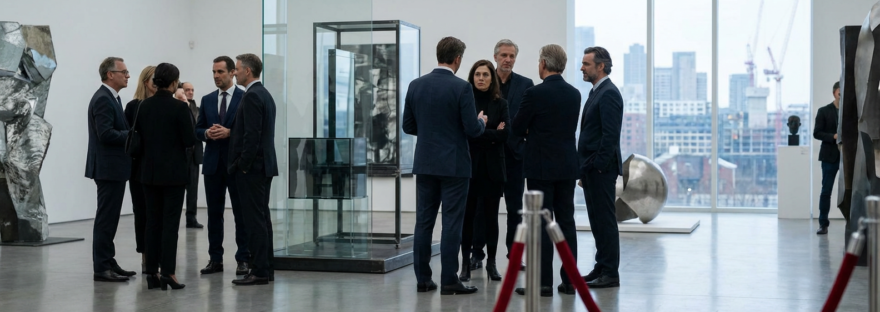
Walk into any blue-chip gallery in Chelsea or Mayfair and you’ll witness something remarkable. Not the art—though some of it might be genuinely great—but the choreographed dance of commerce disguised as cultural enlightenment. The hushed reverence. The strategic placement of price lists just out of casual view. The gallery assistants who’ve perfected the art of being simultaneously invisible and omnipresent.

The Gallery System Isn't Broken—It's Working Exactly as Designed
The Gallery System Isn’t Broken—It’s Working Exactly as Designed

This isn’t an accident. Every element has been carefully calibrated to create what sociologist Pierre Bourdieu called “cultural capital”—the social currency that separates the initiated from the masses. The gallery system operates on exclusion by design, using accessibility as a weapon rather than a bridge.

You don’t need an MFA or a trust fund to understand this machine. You just need to recognize that galleries aren’t neutral spaces displaying art for public edification. They’re sophisticated retail environments selling status, investment opportunities, and membership in an exclusive club. Once we acknowledge this reality, we can actually start to navigate it.

Illustration for The Gallery System Isn't Broken—It's Working Exactly as Designed
Illustration for The Gallery System Isn’t Broken—It’s Working Exactly as Designed

The Economics of Intimidation

Primary market galleries, those representing living artists, make their money through a carefully orchestrated scarcity model. They don’t want everyone to buy their artists’ work. They want the right people buying it. Collectors with museum-quality collections. Institutional buyers. People whose purchases validate their artists’ market position.

This creates the infamous “gallery wait list”—a mythical queue that may or may not exist but creates desire through artificial scarcity. Young collectors get told they need to “build a relationship” with the gallery, code for proving their commitment through smaller purchases and social networking.

Secondary market galleries and auction houses profit from the speculation this system generates. They’re selling yesterday’s discoveries at tomorrow’s prices, banking on the primary market’s ability to create lasting cultural value. It’s a pyramid scheme with prettier packaging.

Here’s the kicker: much of the most innovative contemporary art emerges from artist-run spaces, university galleries, and alternative venues operating outside this economy entirely. The gallery system often discovers and commodifies work that already exists in more accessible contexts.

Decoded: The Language of Exclusion

Gallery wall texts read like academic papers stripped of citations and injected with marketing speak. “Jones interrogates the liminal space between representation and reality” translates to “Jones makes paintings that look weird.” This jargon signals insider knowledge, justifies premium pricing, and creates barriers for uninitiated viewers.

Art criticism follows similar patterns. Reviews in major publications often read like encrypted messages between initiated parties rather than genuine attempts at public communication. They’re written for other critics, curators, and collectors, not for readers genuinely curious about the work being discussed.

Press releases represent the worst offenses. They generate coverage without actually describing what visitors will see. “Utilizing found materials and conceptual frameworks” describes anything from Marcel Duchamp’s readymades to someone’s garage sale assemblage.

Learning to decode this language isn’t about becoming fluent in artspeak. It’s about recognizing when it’s being used to obscure rather than illuminate, and demanding clearer communication from institutions that claim to work in the public interest.

The Curator as Tastemaker

Contemporary curators wield unprecedented influence over what art gets seen, discussed, and ultimately preserved. They’re not neutral scholars but active participants in shaping cultural value. Understanding their role means recognizing the subjective nature of what gets labeled “important” art.

Institutional curators, those working for museums and major art centers, balance multiple pressures. They satisfy board members who often double as major collectors. They need to attract visitors and media attention. They’re expected to contribute to art historical discourse while managing budgets and political considerations.

Independent curators operate in a different ecosystem, often working project-by-project with greater creative freedom but less institutional support. They’re typically more experimental, more willing to take risks with unknown artists or challenging concepts.

The best curators become storytellers, creating exhibitions that reveal new connections between disparate works or artists. They make arguments through spatial arrangements, wall texts, and programming. Understanding their perspective helps decode why certain works appear together and what larger narratives they’re constructing.

Finding Your Way In

The gallery system’s exclusivity is largely performative. Most spaces are legally required to allow public access during posted hours. Gallery staff are generally happy to discuss works with genuinely curious visitors. The intimidation factor exists primarily in visitors’ minds, reinforced by social conditioning about who “belongs” in these spaces.

Start with alternative spaces and university galleries. They’re typically more welcoming to newcomers and often show more experimental work. Artist-run spaces frequently host opening receptions where you can meet the creators directly. These venues operate with fewer pretensions and more genuine enthusiasm for the work itself.

When visiting commercial galleries, remember you’re under no obligation to buy anything or prove your expertise. Ask questions. Request price lists if you’re curious about market values. Read everything available about the artists and works. Most gallery staff genuinely enjoy discussing the art with interested visitors.

Gallery openings remain one of the best ways to observe the social dynamics at play. They’re theater as much as art events, spaces where the audience becomes part of the spectacle. Understanding who attends these events and how they interact reveals as much about the art world as the works on the walls.

The contemporary art world needs curious outsiders willing to ask uncomfortable questions and challenge lazy assumptions. Your perspective matters precisely because you haven’t been trained to accept the system’s artificial barriers as natural law. The most exciting developments in contemporary art often come from people willing to ignore conventional wisdom about how things are supposed to work.
Why Stan Brakhage’s Hand-Painted Films Still Embarrass Digital Cinema

The Tyranny of the Clean Image

Every time someone praises the “crisp 4K restoration” of yet another Hollywood classic, I want to shove them into a dark room with Stan Brakhage’s “Mothlight.” Not because I’m cruel, but because they need to remember what cinema actually is. Strip away the narrative scaffolding, the pristine sound design, the color-corrected perfection, and what remains? Light moving through time. That’s it. That’s the medium.

Why Stan Brakhage's Hand-Painted Films Still Embarrass Digital Cinema
Why Stan Brakhage’s Hand-Painted Films Still Embarrass Digital Cinema

Brakhage understood this in 1963 when he collected dead moths and flower petals, arranged them between strips of 16mm film stock, and ran the whole mess through an optical printer. The result was three minutes of organic chaos that has more cinematic truth than most Marvel films manage in their bloated runtimes. While his contemporaries were still thinking about movies as photographed theater, Brakhage was literally putting nature inside the projector beam.

The film community lost something when it decided that experimental cinema was too difficult, too esoteric, too uncommercial to matter. We traded alchemy for algorithms. But “Mothlight” stands as a rebuke to digital cinema’s obsession with control and precision. Here was an artist who let insects dictate the editing rhythm.

Illustration for Why Stan Brakhage's Hand-Painted Films Still Embarrass Digital Cinema
Illustration for Why Stan Brakhage’s Hand-Painted Films Still Embarrass Digital Cinema

The Violence of Seeing

What makes Brakhage’s hand-painted films so unsettling isn’t their abstract imagery. It’s their aggressive intimacy. When you watch “Dog Star Man” or any film from his “Songs” cycle, you’re experiencing vision stripped of cultural conditioning. No establishing shots to orient you. No fade-outs to give you breathing room. Just pure optical sensation delivered at 24 frames per second.

This is cinema as physical experience, and it beat virtual reality by decades. Brakhage painted directly onto film emulsion with brushes, fingers, sometimes his whole hand. Each frame became a canvas. Each screening became a unique event affected by the specific projector, the room’s acoustics, even the audience’s collective breathing. Try getting that kind of presence from a Netflix stream.

The painter Cy Twombly once said that drawing was a way of thinking. For Brakhage, painting on film was a way of seeing without the interference of conscious thought. His hand-painted films operate below the threshold of recognition, in that liminal space where perception becomes sensation. They’re not abstract. They’re pre-linguistic.

Context Is Everything

Here’s what the film history textbooks won’t tell you: Brakhage was working in deliberate opposition to everything Hollywood represented. While studio executives were calculating market demographics, he was investigating the mechanics of vision itself. His contemporaries in the underground film scene understood this. Maya Deren had already established that American experimental cinema could exist as serious art. Kenneth Anger was proving that camp sensibility and visual sophistication weren’t mutually exclusive.

But Brakhage went further. Where Deren kept narrative threads and Anger relied on pop culture iconography, Brakhage abandoned representation entirely. His painted films don’t depict anything. They are pure cinema in the same way that abstract expressionist paintings are pure painting. Jackson Pollock wasn’t trying to paint a forest. He was making paint behave in ways that revealed something about the medium itself.

This historical moment matters. In the early 1960s, American culture was fragmenting in productive ways. Jazz musicians were abandoning chord progressions. Poets were breaking free from meter. Visual artists were questioning the necessity of the picture frame. Brakhage’s painted films belong to this larger artistic revolution, one that insisted art should challenge perception rather than just confirm it.

The Digital Betrayal

Digital cinema promised democratization but delivered homogenization. Every image now passes through the same color correction software, the same compression algorithms, the same distribution platforms. The texture that made each film stock manufacturer distinct has been flattened into standardized pixel grids. We gained convenience. We lost materiality.

Brakhage’s painted films can’t be properly digitized because they exist as physical objects. The actual paint sits on the film surface, creating tiny topographies that catch projector light in ways that vary with each screening. When archivists attempt digital transfers, they’re creating approximations, not reproductions. Something gets lost in translation.

This isn’t nostalgic romanticism. It’s a recognition that some art forms resist technological mediation. You can’t experience a Rothko painting through a smartphone screen, and you can’t understand Brakhage’s hand-painted films through digital reproduction. The medium isn’t just the message. Sometimes the medium is the only message that matters.

What We Lost and What We Gained

Contemporary experimental filmmakers working with digital tools have created remarkable work. Artists like Lynne Sachs and Robert Todd understand that experimental cinema isn’t about rejecting technology but about using whatever tools are available to investigate perception and time. The spirit of investigation continues, even if the methods have changed.

But something irreplaceable disappeared when celluloid became obsolete. Brakhage’s painted films represent a particular kind of artistic courage: the willingness to work without a safety net, to embrace the unpredictable chemical processes that happen when organic materials meet silver halide emulsion. Digital cinema, for all its innovations, operates within predictable parameters.

The real tragedy isn’t that fewer people are painting on film. It’s that fewer people understand why someone would want to. In our rush toward ever-higher resolution and ever-cleaner images, we’ve forgotten that cinema’s power sometimes lies in its capacity to overwhelm, disorient, and transform our relationship to seeing itself. Brakhage’s painted films remain important because they remind us that movies don’t have to show us anything. Sometimes they just need to teach us how to look.

The next time you’re trapped in another conversation about the latest streaming sensation, remember that cinema is still capable of surprise. Somewhere in an archive or art museum, a print of “Scenes from Under Childhood” waits to assault your expectations about what movies can be. The question isn’t whether you’re ready for it. The question is whether you’re brave enough to let it change how you see.

The Quiet Revolution: How Process Art Rewrote the Rules While Nobody Was Watching

The Movement That Made Minimalism Look Hysterical

While art world gatekeepers were busy canonizing the flashy Pop Art explosion and the austere geometry of Minimalism, something far more radical was happening in studios across America and Europe. Process Art emerged in the late 1960s not with manifestos or gallery fanfare, but through artists who dared to ask a simple, devastating question: what if the making mattered more than the made?

This wasn’t about objects. Eva Hesse wasn’t building sculptures so much as excavating the psychology of materials themselves. Richard Serra wasn’t creating monuments but choreographing gravity, weight, and industrial brutality into temporary encounters with space. Robert Morris abandoned the pedestal entirely, letting felt pieces slump and sag according to their own material logic. They were writing poetry in rust, rope, and rubber.

The art establishment, drunk on the market-friendly repeatability of Warhol’s soup cans, largely missed the point. Process Art couldn’t be collected in the traditional sense. It decomposed, it changed, it refused the stability that collectors and curators craved. Critics dismissed it as anti-art posturing. They were wrong, but their blindness tells us everything about why Process Art matters more today than ever.

Material Honesty in an Age of Artificial Everything

Barry Le Va scattered ball bearings and chalk across gallery floors, then documented the patterns they created through impact and entropy. Hans Haacke grew grass in galleries, exposing the absurdity of trying to contain natural processes within white cube spaces. These weren’t stunts. They were philosophical investigations disguised as artistic practice, asking whether art could exist in the moment of becoming rather than the stasis of being.

The movement’s genius lay in its rejection of artistic hierarchy. There was no precious object to venerate, no singular moment of completion to mark with a signature. Instead, these artists offered something far more subversive: the recognition that creativity is a continuous process, not a product to be consumed. They were democratizing not just art-making but the very definition of what art could be.

Consider how prescient this approach was. In our current moment of NFTs and digital reproducibility, when the art market scrambles to create artificial scarcity around infinitely copyable files, Process Art’s emphasis on unrepeatable temporal events feels prophetic. These artists understood something that the market still refuses to accept: the most valuable artistic experiences resist commodification entirely.

The Documentation Dilemma and the Birth of Conceptual Currency

Here’s where Process Art’s legacy gets complicated. The movement that rejected object-making inevitably generated its own objects: photographs, video documentation, written instructions, and sketches. These traces became the currency through which Process Art entered museums and collections, creating a productive contradiction that still haunts contemporary practice.

Take Robert Smithson’s Spiral Jetty. The actual earthwork, submerged and re-emerging according to the water levels of the Great Salt Lake, exists in a constant state of transformation. But its cultural presence lives primarily through Smithson’s film documentation and photography. The work exists simultaneously as a remote physical reality and a widely circulated image, raising questions about authenticity and presence that feel urgently contemporary.

This documentation paradox anticipated the entire apparatus of social media art culture. Instagram artists today navigate the same tension between lived experience and mediated representation that Process artists confronted five decades ago. The difference is that Process artists recognized the tension as productive, even necessary, rather than trying to resolve it through technological solutions.

Why the Market Killed the Movement (And Why That Was the Point)

Process Art’s commercial failure was also its conceptual success. Galleries struggled to sell works that might literally fall apart or required ongoing maintenance. Museums balked at acquiring pieces that demanded active participation rather than passive contemplation. The movement’s anti-commercial stance wasn’t ideological purity. It was structural inevitability.

But this market resistance masked the movement’s deeper influence. Process Art’s DNA can be traced through every subsequent development that prioritized experience over object: installation art, social practice, relational aesthetics, and participatory media. When Marina Abramović sits motionless for 736 hours at MoMA, when Tino Sehgal sells instructions rather than things, when algorithmic artists code generative systems, they’re building on Process Art’s foundational insight that art can be action rather than artifact.

The movement’s eclipse coincides precisely with the art market’s financialization in the 1980s. As collecting became investment strategy, Process Art’s emphasis on ephemerality and change became commercially untenable. The market didn’t just ignore Process Art. It actively selected against its core principles, favoring movements that could generate stable, tradeable assets.

The Resurrection We Didn’t Notice

Process Art never really died. It just shed its name and dispersed into the broader ecosystem of contemporary practice. Every time an artist livestreams their studio process, every time a work exists primarily as documentation of an action, every time creativity is framed as research rather than production, Process Art’s influence asserts itself.

The movement’s most radical proposition—that artistic value might reside in doing rather than having—feels more relevant than ever in our platform economy, where content creation has become a form of labor and creativity has been gamified into constant production. Process artists understood that making could be an end in itself, not just a means to a marketable conclusion.

What we lost when Process Art disappeared from critical discourse wasn’t just a historical movement, but a way of thinking about artistic time and attention. In our current moment of abbreviated attention spans and accelerated production cycles, Process Art’s insistence on duration, change, and material investigation offers a model for resistance that doesn’t require wholesale rejection of contemporary conditions.

The movement’s true legacy might be its demonstration that artistic significance doesn’t require institutional validation or market success. Process artists created a parallel economy of value based on experience, investigation, and temporal engagement. They proved that art could matter profoundly while remaining commercially invisible. In an age when artistic worth is increasingly measured by metrics and market performance, that lesson deserves more than historical footnote status. It demands active recovery.

Why The Meridian Gallery’s “Disrupted Frequencies” Demands Your Immediate Attention

The Underground Circuit Finally Surfaces

Three blocks from the tourist-clogged main strip, tucked between a vintage vinyl shop and a failing taco joint, The Meridian Gallery has quietly assembled the most provocative exhibition this city has seen since the infamous “Municipal Breakdown” show of 2019. “Disrupted Frequencies” brings together seven artists who have been working in deliberate obscurity, creating sound installations and kinetic sculptures that question our relationship with technology in ways that make the Whitney Biennial look quaint.

Gallery director Sarah Chen has done something remarkable here. She’s resisted the temptation to package these works with explanatory wall text that treats visitors like children. Instead, she’s created a sonic labyrinth where Yuki Tanaka’s modified shortwave radios crackle with intercepted air traffic control chatter while Marcus Webb’s motorized sculptures scrape and grind in mechanical conversation. The cacophony shouldn’t work. It absolutely does.

This is smart curation. Chen gets that these artists came out of the same post-internet anxiety that produced Hito Steyerl’s video installations and Trevor Paglen’s surveillance work. But where those artists court institutional approval, this crew spent years developing their practice in warehouse spaces and DIY venues. The gallery setting doesn’t tame their work. It cranks up the volume.

Tanaka’s Radical Archaeology

Yuki Tanaka’s contribution alone justifies the trek across town. Her installation “Signal Drift” transforms three vintage Grundig radios into archaeological instruments, scanning electromagnetic frequencies for fragments of discarded communication. The work operates on multiple time layers at once. You hear snippets of decades-old radio dramas bleeding through modern cell tower interference, creating an accidental sound collage that John Cage would have envied.

What makes Tanaka’s work essential is her refusal to romanticize analog technology. These aren’t nostalgic objects mourning a simpler past. They’re forensic tools excavating the layers of invisible infrastructure that surround us. When a weather report from 1987 suddenly emerges through the static, followed immediately by a fragment of contemporary GPS coordinates, the effect is genuinely unsettling.

The historical precedent here runs deep. Tanaka’s methodology recalls the early tape experiments of Pauline Oliveros and the radio art of Gregory Whitehead, but her execution feels urgent in ways that retrospective exhibitions of those artists often don’t. She’s not preserving experimental music history. She’s pushing it into territory that feels genuinely contemporary.

Webb’s Mechanical Minimalism

Marcus Webb’s sculptural interventions occupy the gallery’s central space like industrial totems. His “Friction Studies” series consists of seven motorized assemblages that perform repetitive grinding motions, wearing down different materials at precisely calculated rates. Over the course of the exhibition’s six-week run, visitors will witness the sculptures literally consuming themselves.

The conceptual framework here connects to land art traditions while subverting their relationship to time and space. Where Robert Smithson’s “Spiral Jetty” requires geological time scales to complete its transformation, Webb’s machines compress entropy into observable duration. You can return multiple times and witness measurable change. It’s process art for our sped-up moment.

Webb’s background in industrial design shows in every component. These aren’t art school approximations of machinery. They’re precisely engineered devices that happen to serve poetic rather than practical functions. The sound they generate shifts subtly as materials degrade, creating a changing sonic environment that mixes with Tanaka’s radio frequencies in unexpected ways.

The Collective Conversation

The remaining five artists function as a supporting constellation that prevents the exhibition from becoming a two-person show. Elena Rodriguez contributes video work that documents electromagnetic interference patterns in urban environments. Her cameras capture the invisible static that surrounds cell towers and Wi-Fi networks, making the intangible suddenly visible through long-exposure techniques borrowed from astrophotography.

David Kim’s sound sculptures respond to the gallery’s acoustic environment in real time, adjusting their output based on ambient noise levels and visitor movement. When the space fills with people, his work becomes more aggressive. During quiet moments, it retreats into barely audible whispers. The pieces work as institutional critique disguised as participatory installation.

What emerges from this collective effort is a sustained meditation on technological mediation that avoids both technophobic panic and uncritical digital optimism. These artists understand that technology is neither salvation nor apocalypse. It’s a set of tools that amplify existing human tendencies toward both creation and destruction. The exhibition’s strength lies in its refusal to resolve this tension into comfortable conclusions.

Beyond the Buzz

The art world’s current obsession with NFTs and virtual reality makes “Disrupted Frequencies” feel almost anachronistic in its commitment to physical presence and temporal duration. You cannot experience these works through documentation. They require your body in the gallery space, your ears attuned to subtle sonic shifts, your willingness to return multiple times as the installations change.

This insistence on embodied experience connects the show to a lineage of installation art that runs from Kurt Schwitters’ “Merzbau” through Bruce Nauman’s sound corridors to Janet Cardiff’s audio walks. But where those precedents often isolated visitors in private encounters with the work, “Disrupted Frequencies” creates a genuinely collective experience. The installations respond to crowd dynamics, creating different configurations depending on who else is present.

The Meridian Gallery has extended the exhibition through late March, recognizing that these works require extended engagement to reveal their full complexity. Chen has also organized a series of evening performances where local musicians will respond to the installation environment, further blurring the boundaries between exhibition and experimental music venue. This level of institutional commitment to difficult work deserves recognition and support from anyone who believes contemporary art should challenge rather than comfort its audience.

When Artists Collide: The Electric Magic of Cross-Medium Collaboration

Breaking Down the Silos

Here’s what the gatekeepers don’t want you to know: the most electrifying art happens when boundaries dissolve. While critics obsess over genre purity and medium-specific mastery, the real innovators are busy smashing through walls. Think David Lynch directing music videos for Nine Inch Nails, or Laurie Anderson wielding electronics like a painter uses brushstrokes. These aren’t marketing stunts or celebrity crossovers. They’re artistic nuclear fusion.

When Artists Collide: The Electric Magic of Cross-Medium Collaboration

The academy loves its compartments. Painters paint, musicians make music, dancers dance. But this segregation is artificial, a bureaucratic convenience that has nothing to do with how creativity actually works. When Basquiat collaborated with Michael Holman’s band Gray, or when Björk worked with Michel Gondry on those mind-bending videos, they weren’t breaking rules. They were following the oldest artistic impulse: the urge to synthesize, to create something that couldn’t exist any other way.

Cross-medium collaboration pushes artists out of their comfort zones and into uncharted territory. A filmmaker working with a choreographer doesn’t just get dance sequences. They get movement as narrative, body language as cinematography, rhythm as editing philosophy. The result isn’t addition but multiplication.

When Different Languages Start Talking

Every artistic medium speaks its own dialect of human experience. Photography captures light and shadow, music manipulates time and silence, theater explores presence and pretense. When these languages start talking to each other, translation becomes transformation. Consider how Pina Bausch’s dance theater merged movement with dramatic narrative, or how Robert Wilson’s opera productions turned singing into visual sculpture.

The magic happens in the gaps between mediums, in those spaces where one art form can’t quite reach. A painter might struggle to convey temporal progression, but pair them with a musician and suddenly color becomes rhythm, brushstroke becomes melody. The 2016 collaboration between visual artist Anselm Kiefer and composer Jörg Widmann created “Resurrection,” an opera where massive paintings weren’t just backdrop but active participants in the musical drama.

These partnerships reveal hidden connections that solo artists might never discover. When Radiohead worked with director Paul Thomas Anderson, the band’s abstract soundscapes found visual vocabulary in Anderson’s precise, unsettling imagery. Neither medium dominated. Instead, they created a third language that spoke in ways neither could achieve alone.

Technology Levels the Playing Field

Digital tools have torn down the technical barriers that once kept artistic mediums separate. A musician can now create visual art through code. A painter can compose soundscapes. A dancer can generate real-time imagery through motion capture. These aren’t gimmicks when used thoughtfully. They’re new instruments in humanity’s creative orchestra.

Look at how Rafael Lozano-Hemmer uses technology to merge architecture, light, and interactivity in his public installations. His “Pulse Room” turns heartbeats into light patterns, transforming the gallery space into a living, breathing organism. Or consider how Casey Reas writes code that generates visual art, turning programming into a paintbrush that creates infinite variations on mathematical themes.

The democratization goes deeper than tools. Social media platforms and digital distribution have made collaboration easier and more accessible than ever. Artists no longer need institutional support or geographic proximity to work together. A sound artist in Tokyo can collaborate with a video artist in São Paulo, sharing files and ideas across time zones and continents.

But technology alone doesn’t make great collaborative art. The most successful cross-medium projects use digital tools to amplify human creativity, not replace it. The technology works for the artistic vision, not the other way around. When it works, you forget about the pixels and algorithms and focus on the experience being created.

The Economics of Artistic Fusion

Let’s be practical for a moment. Cross-medium collaboration isn’t just artistically rewarding, it’s economically smart. In an attention economy where audiences get bombarded with content, collaborative projects cut through noise more effectively than traditional single-medium work. They create multiple entry points for discovery and generate buzz across different artistic communities.

Consider how the collaboration between visual artist KAWS and musicians like Kanye West introduced KAWS’s work to audiences who might never set foot in a gallery. Or how filmmaker Ari Aster’s partnership with composer Colin Stetson on “Hereditary” created a horror soundscape that worked as both film score and standalone album. These projects expand audiences rather than stealing from them.

The business model is evolving too. Instead of competing for limited attention, collaborative projects create new markets and revenue streams. A dance piece filmed for digital distribution reaches global audiences. A musician’s album paired with visual art creates limited edition experiences that command premium prices. The collaboration becomes the brand.

Your Invitation to the Creative Collision

Starting your own cross-medium collaboration doesn’t require fame, funding, or institutional backing. It requires curiosity and courage. Begin by paying attention to artists working in mediums outside your own. What do they see that you miss? How do they solve problems you struggle with? What would happen if you combined your strengths with theirs?

The best collaborations start with genuine mutual respect and complementary skills, not identical visions. Seek out artists whose work challenges your assumptions. If you’re a writer, find a musician whose compositions make you think differently about rhythm and pacing. If you’re a visual artist, collaborate with a performer who understands the power of presence and timing.

Start small. Create something together for the joy of creation, not for fame or profit. Document the process. Share the failures along with the successes. The art world needs more honest documentation of how collaboration actually works, including the messy, uncertain parts that don’t make it into the final presentation.

We need artists who refuse to stay in their lanes, who understand that creativity is bigger than any single medium can contain. The tools are available, the audiences are waiting, and the only thing standing between you and your next great collaboration is the decision to reach across the aisle and start a conversation with another kind of artist entirely.

The Death of Authentic Discovery: How Streaming Algorithms Buried the Underground

The Last Gasp of Organic Scenes

The underground is dead. Not literally, of course. Musicians still gather in basements, abandoned warehouses still echo with experimental noise, and kids still trade USB drives loaded with bedroom recordings. But the ecosystem that once nurtured these sounds into movements? That’s been systematically dismantled by the very platforms that promised to democratize music discovery.

The Death of Authentic Discovery: How Streaming Algorithms Buried the Underground

We’re watching the final gasps of a culture that once thrived on scarcity, word-of-mouth evangelism, and the sacred act of digging. The old gatekeepers were flawed, sure, but they understood something fundamental: great art needs incubation time. It needs small rooms where failure is acceptable, where an audience of twelve people can sustain a band for months while they perfect their sound.

Spotify’s algorithm doesn’t care about your three-month residency at a dive bar in Cleveland. It wants engagement metrics within the first thirty seconds. The result? A generation of artists optimizing for virality instead of vision, crafting hooks for playlist placements rather than building movements that could reshape entire genres.

The Flattening of Regional Identity

Remember when you could hear a record and immediately place its geographic origins? Manchester had that specific jangle, Detroit carried the weight of industrial decay in every synthesizer line, and Minneapolis bred a particular brand of literate punk that couldn’t have emerged anywhere else. These weren’t marketing constructs. They were organic responses to local conditions, shared spaces, and regional conversations happening in real time.

The streaming economy has bulldozed these regional distinctions. Why develop a scene-specific sound when TikTok demands universal accessibility? Why invest in local infrastructure when bedroom producers can achieve global reach without ever playing a live show? The platform economy rewards the generic and punishes the genuinely regional.

Take the current state of what passes for “underground” hip-hop. SoundCloud rap promised to decentralize the genre, to let regional voices flourish outside major label machinery. Instead, it created a homogenized aesthetic where every bedroom producer from Phoenix to Portland adopts the same lo-fi textures and emotional registers. The tools of liberation became tools of conformity.

This isn’t nostalgia talking. It’s pattern recognition. The conditions that created krautrock, no wave, or UK garage weren’t accidental. They required specific cultural pressures, limited resources, and most importantly, time to develop away from commercial scrutiny. Streaming algorithms provide none of these conditions.

The Myth of Infinite Access

The great lie of the digital music revolution is that infinite access equals infinite discovery. Having thirty million songs at your fingertips sounds revolutionary until you realize that most people engage with fewer artists than they did in the physical era. The paradox of choice meets algorithmic filtering, creating echo chambers more restrictive than any record store could ever be.

Record stores were inefficient, sure, but inefficiency bred serendipity. You’d walk in looking for the new Sonic Youth album and leave with some Japanese noise cassette the clerk insisted you needed to hear. That clerk had skin in the game. Their reputation depended on making good recommendations. Spotify’s algorithm has no reputation to protect, only engagement rates to optimize.

The old tastemakers were human, which meant they were flawed, biased, and occasionally brilliant. They could champion a difficult record because they understood its place in a larger narrative. They could nurture careers over decades, not just viral moments. The algorithmic tastemakers that replaced them optimize for immediate gratification, not cultural memory.

What We Lost in the Translation

The underground scenes that defined the last fifty years of popular music shared certain characteristics: they were local, they were social, and they were built on shared struggle. Whether it was CBGB’s rent problems, Factory Records’ financial chaos, or the simple impossibility of booking decent venues in most American cities, limitations forced creativity.

The streaming economy has eliminated most practical limitations while creating new, invisible ones. You can record an album on your laptop and distribute it globally for free, but getting anyone to actually listen requires navigating algorithmic systems designed to promote familiar sounds. The barrier to entry disappeared, but the barrier to meaningful engagement became insurmountable.

Consider what we’ve lost in this translation. The album as complete artistic statement. The single as carefully chosen representative. The B-side as experimental playground. The remix as radical reinterpretation. These formats weren’t arbitrary. They emerged from physical limitations that forced artists to think structurally about their work.

Streaming’s endless scroll has flattened these distinctions. Everything is content now, optimized for playlist placement and algorithmic discovery. The result is music that prioritizes immediate impact over lasting resonance, hooks over development, familiarity over innovation.

Mourning What Never Had to Die

The tragedy isn’t that technology changed music. Technology has always changed music, usually for the better. The tragedy is that we accepted the specific changes that platforms imposed without questioning their necessity. We didn’t have to surrender curatorial culture to algorithmic efficiency. We didn’t have to trade regional scenes for global reach. We didn’t have to optimize for engagement metrics over artistic development.

The underground scenes of the past weren’t perfect. They were often exclusionary, frequently elitist, and occasionally hostile to genuine innovation. But they provided something essential that our current systems cannot: time and space for artists to develop without constant commercial pressure. They created contexts where weird music could find its audience organically, where failure was a learning experience rather than algorithmic death.

What remains of authentic underground culture exists despite our current systems, not because of them. The artists still making genuinely challenging music are doing so in opposition to every incentive structure the industry now provides. They deserve better infrastructure than bedroom studios and social media promotion. They deserve scenes, not just streaming numbers.

The future of underground music won’t be found in nostalgia for vinyl records or analog recording techniques. It will emerge from artists and audiences who reject the false choice between technological advancement and cultural depth. The tools exist to build better systems. The question is whether we still remember why those systems matter.

The Alchemy of Code: How Digital Artists Are Rewriting the Rules of Creation

When Pixels Became Paint

The revolution didn’t announce itself with manifestos or gallery protests. It arrived quietly, through the blue glow of computer screens in artists’ studios around 1985, when the first affordable graphics workstations made digital creation accessible beyond corporate research labs. While critics were still debating whether photography qualified as “real art,” a handful of visionaries were already manipulating light itself, pixel by pixel.

The Alchemy of Code: How Digital Artists Are Rewriting the Rules of Creation

The early pioneers faced a brutal learning curve. Creating a single frame meant mastering not just aesthetic principles, but programming languages, mathematical algorithms, and hardware limitations that would make a traditional painter weep. Artists like Harold Cohen spent decades developing AARON, his autonomous drawing program, treating code as both brush and canvas. This wasn’t illustration software with preset filters. This was raw digital matter, requiring artists to build their tools from scratch before they could even begin to create.

The technical constraints bred innovation. Limited color palettes forced artists to master dithering techniques that created the illusion of millions of hues using only 256. Memory restrictions meant every pixel mattered. These limitations weren’t obstacles but sculptural elements, shaping the aesthetic DNA of an entirely new medium. The pixelated landscapes of early computer art weren’t crude approximations of reality. They were crystalline visions of a digital sublime.

The Render Farm Renaissance

By the 1990s, processing power had exploded, and with it, the complexity of digital creation. The romantic notion of the lone artist in their studio gave way to collaborative workflows that resembled film production more than traditional fine art. Rendering a single complex 3D scene could tie up a computer for days, leading artists to develop increasingly sophisticated project management skills alongside their aesthetic sensibilities.

The rise of procedural generation created a philosophical shift as profound as the invention of the camera. Artists began designing systems that could create infinite variations, embedding their aesthetic DNA into algorithms that could evolve and surprise even their creators. Karl Sims’s evolutionary art installations let viewers breed digital organisms, while Casey Reas developed Processing, a programming language specifically designed for visual artists. The artist’s role transformed from maker to architect of possibility.

This period saw what I call “computational craftsmanship.” Artists spent months perfecting shader networks, obsessing over subsurface scattering values, and building custom particle systems. The technical mastery required rivaled that of Renaissance masters mixing their own pigments. Except now the pigments were mathematical formulas, and the canvas was a three-dimensional space limited only by processing power and imagination.

Real-Time Revolution

The shift from pre-rendered to real-time creation has fundamentally changed how artists relate to their medium. Modern graphics cards process millions of calculations per second, letting artists sculpt light and form in real-time. This isn’t just faster iteration. It’s a completely different cognitive process, more like improvisation than traditional composition.

Tool developers have responded by creating increasingly sophisticated real-time environments. Programs like TouchDesigner and Notch allow artists to build complex visual systems using node-based interfaces, connecting data sources to visual outputs in ways that would have been impossible without dedicated programming teams just a decade ago. The barrier between code and creativity has basically dissolved.

The democratization of these tools has created a new generation of digital natives who think in systems rather than objects. They create responsive environments that react to sound, motion, biometric data, and environmental sensors. Their works exist not as fixed artifacts but as living systems that evolve with each iteration. The audience becomes a collaborator, their presence and interaction integral to the work’s completion.

Neural Networks and New Aesthetics

Machine learning has introduced the most significant shift since the invention of computer graphics itself. Artists are now training neural networks on vast datasets, creating AI collaborators that can generate endless variations on aesthetic themes. But the real innovation isn’t in the output, it’s in the curation process. Artists have become aesthetic editors, training algorithms to recognize and reproduce specific visual qualities.

The technical process reveals new forms of craftsmanship. Training a successful generative model means understanding dataset composition, loss functions, and hyperparameter optimization. Artists spend weeks fine-tuning training procedures, adjusting learning rates and architectural decisions with the same precision a traditional painter applies to color mixing. The studio has become part laboratory, part atelier.

What fascinates me is how this technology has revived interest in fundamental questions about creativity itself. When an algorithm generates a compelling image, who is the artist? The programmer who wrote the code? The person who curated the training data? The operator who selected the final output? These aren’t philosophical abstractions. They’re practical questions that affect everything from copyright law to gallery attribution.

The Craft Imperative

Despite the sophistication of modern tools, the most compelling digital art still emerges from deep technical understanding. The artists making work that transcends novelty are those who’ve mastered their tools completely, who understand the mathematical principles underlying every visual effect. They’re not using presets or relying on automatic settings. They’re building custom solutions for specific aesthetic problems.

This return to craftsmanship represents a rejection of the “democratization” narrative that suggests good tools automatically produce good art. The most interesting digital artists today view technical mastery as a prerequisite for meaningful expression, not an obstacle to it. They understand that every medium has its own vocabulary, and fluency requires years of dedicated study.

The future belongs to artists who can navigate both domains, those who understand color theory and composition while also grasping the complexities of compute shaders and neural architecture. They’re building tomorrow’s aesthetic vocabulary, one carefully crafted algorithm at a time. The question isn’t whether digital art has arrived. The question is whether we’re sophisticated enough as viewers to recognize the depth of craft required to make it sing.

The Invisible Machinery: How Gallery Politics Shape What You Never See

The Curator’s Gambit

Walk into any contemporary gallery and you’re witnessing the end result of a complex chess game played months, sometimes years, in advance. The pristine white walls and carefully positioned spotlights mask a twisted process of negotiations, compromises, and calculated risks that would make a diplomatic summit look straightforward. Every piece you encounter has survived multiple rounds of elimination, not necessarily because it’s the strongest work, but because it fits into a complicated puzzle of institutional priorities, donor preferences, and curatorial ambitions.

Consider the mechanics behind a major group exhibition. The lead curator doesn’t simply cherry-pick their favorite pieces from a vast artistic buffet. They must navigate the treacherous waters of artist availability, loan agreements with collectors who may have personal vendettas against certain institutions, and insurance valuations that can torpedo entire exhibition concepts. A single work might require eighteen months of diplomatic maneuvering between three different museums, two private collectors, and one notoriously difficult estate. Meanwhile, the artist’s gallery representation hovers in the background, calculating how this institutional exposure will affect market positioning and future sales.

The selection process itself operates on multiple simultaneous levels of consideration. There’s the aesthetic argument, the historical narrative, the educational mission, and the unspoken commercial imperatives that keep the lights on. A curator might champion an overlooked mid-career artist whose work perfectly complements their thesis, only to discover that including them means losing a promised loan from a major collector whose cooperation is essential for the exhibition’s centerpiece. These negotiations happen behind closed doors, in conference calls that never make it into exhibition catalogs or wall texts.

The Economics of Artistic Validation

Money flows through the contemporary art ecosystem in patterns that would fascinate an anthropologist studying gift economies. The relationship between commercial galleries and non-profit institutions creates a delicate dance where everyone pretends commerce doesn’t influence artistic judgment while simultaneously depending on it for survival. A gallery might “donate” a work to a museum’s permanent collection, generating a tax write-off while establishing institutional validation that increases the market value of similar works by the same artist.

The timing of these relationships reveals their true complexity. A gallery will strategically place works in museum collections just before launching a major solo exhibition, creating an artificial scarcity that drives up prices at art fairs. The institutional seal of approval becomes a form of cultural currency, transformable into actual currency through carefully orchestrated market manipulation that operates entirely within legal boundaries. Meanwhile, museums benefit from acquiring significant works at below-market valuations while maintaining their educational mandate.

Board dynamics introduce another layer of influence that rarely surfaces in public discourse. When a trustee owns seventeen works by an artist who suddenly appears in multiple group exhibitions across their city, it’s not necessarily corruption. It might represent genuine artistic merit coinciding with access and advocacy. But the process by which these opportunities arise involves relationship building, strategic socializing, and influence networks that operate parallel to, and sometimes counter to, purely aesthetic considerations.

The Architecture of Exclusion

Every exhibition is simultaneously about what it includes and what it systematically excludes. The craft of exclusion requires more sophisticated decision-making than selection itself. Curators must balance geographic representation, gender parity, racial diversity, and generational spread while maintaining conceptual coherence and aesthetic quality. These considerations create complex mathematical problems where every inclusion automatically eliminates multiple other possibilities.

The physical constraints of gallery spaces impose restrictions that shape artistic visibility in unexpected ways. A work that requires specific environmental controls might be excluded not for aesthetic reasons but because the institution lacks appropriate climate control systems. Size restrictions eliminate monumental pieces that could transform an exhibition’s impact. Technical requirements for video installations, sound works, or interactive pieces create practical barriers that favor traditional media regardless of curatorial preference.

Documentation requirements add another filter to the selection process. Works that photograph well for catalogs and social media receive unconscious preference over pieces that reveal their power only through direct encounter. This bias toward photogenic art creates systematic discrimination against subtle, experiential, or temporally complex works that resist reproduction. The Instagram-ability factor has become a legitimate curatorial consideration, though rarely acknowledged publicly.

The Temporal Politics of Art History

Contemporary galleries operate within multiple simultaneous timeframes that create fascinating tensions in their decision-making processes. There’s the immediate pressure to generate attendance and media coverage, the medium-term goal of building institutional reputation, and the long-term responsibility to art historical legacy. These different temporal perspectives often conflict, forcing curators to choose between immediate impact and lasting significance.

The construction of art historical narrative happens in real-time through exhibition-making. Curators actively shape future scholarship by determining which artists receive institutional validation and which remain marginalized. This responsibility weighs heavily on exhibition development, creating conservative tendencies that favor established names over emerging voices. The safest curatorial strategy involves building exhibitions around artists whose importance has been predetermined by market forces and academic consensus.

Revisionist exhibitions that challenge established art historical narratives require extraordinary institutional courage and resources. Recovering overlooked artists, particularly those whose work doesn’t align with dominant aesthetic trends, demands extensive research, complex loan negotiations, and educational programming that helps audiences understand unfamiliar artistic languages. These exhibitions often receive critical acclaim but struggle to generate the attendance numbers that justify their substantial costs.

The Craft of Institutional Memory

The most sophisticated aspect of gallery politics involves managing institutional memory and reputation across decades of programming decisions. Each exhibition becomes part of a cumulative institutional identity that attracts certain audiences while repelling others. Galleries develop artistic personalities that influence everything from funding opportunities to artist submissions, creating self-reinforcing cycles that can trap institutions in narrow aesthetic territories.

The documentation and preservation of exhibition history reveals another layer of curatorial craft that operates behind the scenes. Catalogs, installation photographs, and press coverage create permanent records that outlast the temporary exhibitions they document. The quality and perspective of this documentation shapes how future scholars and curators understand both individual artists and institutional contributions to cultural history. Poor documentation can erase significant exhibitions from art historical memory, while exceptional documentation can elevate modest shows to canonical status.

These invisible processes of institutional memory-making deserve the same critical attention we give to the artworks themselves. The politics of contemporary galleries shape not just what we see today, but what future generations will understand about our cultural moment. Understanding these mechanisms doesn’t diminish the power of great art, but it does reveal the human systems that determine which great art gets the chance to find its audience.

The Quiet Revolution: How Kitchen Sink Realism Rewrote the Rules While Nobody Was Watching

The Movement That Dared to Look Down

While the art world obsessed over Abstract Expressionism’s grand gestures and Pop Art’s flashy commercialism, a quieter revolution was unfolding in the grimy terraced houses and cramped bedsits of post-war Britain. Kitchen Sink Realism didn’t announce itself with manifestos or gallery spectacles. It simply pointed its unflinching gaze at the ordinary lives everyone else deemed unworthy of artistic attention.

The movement emerged in the 1950s, led by painters like John Bratby, Derrick Greaves, Edward Middleditch, and Jack Smith. These artists committed the ultimate sin against modernist orthodoxy: they painted what they saw. Kitchen tables cluttered with dirty dishes. Unmade beds. Working-class families cramped into inadequate housing. The detritus of daily existence that polite society preferred to ignore.

Critics dismissed it as provincial. Galleries treated it as a curiosity. The establishment art world, still drunk on the romance of American abstract painting, couldn’t comprehend why anyone would waste paint on such mundane subjects. They were spectacularly missing the point.

The Radical Act of Seeing

What made Kitchen Sink Realism revolutionary wasn’t just its subject matter but how it completely upended who and what deserved artistic attention. When John Bratby painted “Still Life with Chip Frier” in 1954, he wasn’t just depicting kitchen appliances. He was declaring that working-class domestic life had the same dignity and complexity as any Renaissance Madonna or Impressionist water lily.

The movement’s influence spread far beyond painting. Playwrights like John Osborne and Arnold Wesker brought the same unflinching realism to theatre, while filmmakers like Tony Richardson and Karel Reisz translated the aesthetic to cinema. This wasn’t coincidence but convergence. They all recognized that British culture had been suffocating under layers of genteel pretense.

Consider Bratby’s “Jean and Still Life” from 1954, where his wife sits surrounded by the chaos of their cramped flat. The painting refuses to romanticize poverty or domesticity. Instead, it presents both with startling honesty, finding profound humanity in the mundane struggle of making do. The critics who sneered at such “low” subject matter revealed more about their own class anxiety than about the work’s artistic merit.

The Establishment Strikes Back

By the early 1960s, the art establishment had mounted its counteroffensive. Pop Art arrived from America with its seductive blend of commercial imagery and conceptual sophistication. Suddenly, Kitchen Sink Realism looked embarrassingly earnest, hopelessly provincial. The same critics who had initially dismissed it now buried it under accusations of sentimentality and social realism.

The timing was brutal. Just as Kitchen Sink painters were finding their mature voice, the cultural conversation shifted toward irony, appropriation, and conceptual play. Bratby’s later work grew increasingly expressionistic, as if trying to prove his avant-garde credentials. The movement lost confidence in its own revolutionary vision.

This critical abandonment reflected broader cultural shifts. Britain was modernizing rapidly, shedding its post-war austerity for consumer prosperity. The grimy realities that Kitchen Sink Realism had documented were being demolished, literally and figuratively. New tower blocks replaced terraced slums. Television replaced the local pub as the center of working-class social life. The movement’s subject matter was disappearing even as its artistic achievement was being forgotten.

The Long Shadow of Influence

Despite its critical eclipse, Kitchen Sink Realism’s DNA spread throughout British culture in ways that remain visible today. The social realist tradition in British cinema, from Ken Loach to Mike Leigh, traces a direct line back to those cramped 1950s canvases. The movement’s commitment to depicting working-class life without condescension or romanticism established a template that continues to influence contemporary artists.

More profoundly, Kitchen Sink Realism anticipated many concerns of later conceptual and political art practices. Its insistence that everyday life deserved serious artistic attention came decades before institutional critique and social practice art made these ideas fashionable. When artists like Jeremy Deller or Phil Collins examine contemporary working-class culture, they’re continuing conversations that Bratby and his contemporaries initiated.

The movement also challenged fundamental assumptions about artistic hierarchy that the art world is still grappling with today. Why should a Campbell’s soup can be more worthy of artistic attention than a kitchen sink? Kitchen Sink Realism asked this question decades before Warhol made it fashionable, but received none of the theoretical apparatus that elevated Pop Art to canonical status.

Reclaiming the Revolution

Recent scholarship has begun to reassess Kitchen Sink Realism’s contribution, recognizing it as a sophisticated response to post-war social transformation rather than mere documentary illustration. The movement’s painterly qualities, previously dismissed as crude or naive, now appear deliberately anti-academic. They rejected the refined techniques that had become associated with elite cultural production.

The work’s emotional directness, once considered its weakness, now seems prescient. In an era of increasing inequality and social fragmentation, Kitchen Sink Realism’s commitment to witnessing ordinary struggle feels urgently relevant. These artists understood that political art doesn’t require explicit ideology. Sometimes the most radical act is simply paying attention to lives the powerful prefer to ignore.

What we lost when we abandoned Kitchen Sink Realism wasn’t just a painting style but a way of seeing. The movement insisted that art’s highest purpose wasn’t transcendence but recognition. Not escape but engagement. It offered a model of artistic practice grounded in social solidarity rather than individual expression, community observation rather than personal vision.

The next time you encounter a Kitchen Sink painting in some dusty museum corner, resist the urge to hurry past toward more celebrated works. Stop and look properly at what these artists achieved. They didn’t just paint kitchen sinks. They painted the world we actually inhabit, with all its mess and struggle and stubborn dignity. In an art world still obsessed with spectacle and theory, that remains a genuinely radical act. What other “minor” movements might we be overlooking while chasing the latest critical darling?

The Invisible Curators: How Gallery Politics Shape What We Never See

The Gatekeeper’s Gambit

Walk into any contemporary gallery during a typical Friday opening and you’re witnessing the end result of a complex negotiation that began months, sometimes years earlier. The pristine white walls and carefully positioned spotlights mask a battlefield where artistic vision collides with market forces, institutional politics, and the personal vendettas of people whose names you’ll never know. While critics dissect the work on display, they rarely acknowledge the invisible architecture of power that determined which artists made it onto those walls in the first place.

Gallery directors operate like medieval courtiers, balancing the whims of collectors, the expectations of artists, and the brutal economics of rent in major art districts. When David Zwirner chooses to represent an emerging artist, that decision ripples through the entire ecosystem. Suddenly, museum curators who wouldn’t return the artist’s emails are scheduling studio visits. Art fair booths materialize. Auction houses start paying attention. The gallery’s stamp of approval doesn’t just validate the work, it transforms its very meaning within the cultural conversation.

Take the curious case of how certain artistic movements gain momentum while others vanish into obscurity. The rise of Pictures Generation photography in the 1980s wasn’t simply about artistic merit. It required Metro Pictures’ Helene Winer and Janelle Reiring to champion Cindy Sherman and Richard Prince at precisely the moment when postmodern theory was reshaping academic discourse. Without that institutional backing, these now-canonical works might have remained relegated to alternative spaces, their critical impact diminished by lack of visibility.

The Economics of Artistic Truth

Every gallery operates on a financial tightrope that directly influences artistic programming. The blue-chip galleries can afford to take risks because their established artists subsidize experimentation. When Gagosian mounts a show of unproven work, they’re banking on their Cy Twombly and Jeff Koons sales to cover potential losses. This economic reality creates a tiered system where artistic daring becomes a luxury good, available only to those institutions wealthy enough to absorb failure.

Mid-tier galleries face more brutal calculations. They must balance artistic integrity against survival, often leading to programming decisions that prioritize marketability over innovation. The pressure gets worse during art fair season, when galleries spend enormous sums on booth fees, shipping, and accommodation, desperately hoping to recoup costs through sales. An emerging artist whose work doesn’t photograph well for Instagram or translate easily to collectors’ living rooms faces an uphill battle, regardless of conceptual sophistication.

This economic framework explains why certain aesthetic trends proliferate while others struggle for representation. The current obsession with large-scale abstract paintings isn’t purely driven by artistic merit. These works satisfy multiple market demands: they reproduce well in digital catalogs, scale impressively in collector homes, and carry the historical gravitas that justifies five-figure price points. Meanwhile, time-based media, performance work, and socially engaged practice often get marginalized, not because they lack artistic value, but because they resist easy commodification.

The Collector’s Shadow Cabinet

Behind every significant gallery lurks a shadow cabinet of collectors whose preferences shape programming in ways that remain largely invisible to the public. These relationships operate on unspoken agreements and decades-long loyalties that can make or break artistic careers. When a major collector expresses interest in a particular artist or movement, galleries scramble to secure representation or organize exhibitions that cater to these preferences.

The influence extends beyond simple market manipulation. Collectors like Charles Saatchi or François Pinault don’t just buy art, they actively shape cultural narratives through their acquisitions and subsequent museum exhibitions. When these collections enter institutions, they carry the aesthetic preferences and blind spots of their original owners. The result is a feedback loop where collector taste influences gallery programming, which in turn shapes critical discourse and institutional validation.

This dynamic becomes particularly problematic when you look at issues of diversity and representation. If the collector base skews toward a particular demographic with specific aesthetic preferences, galleries face pressure to program accordingly. The recent push for greater diversity in gallery representation didn’t emerge solely from progressive values, it reflected changing collector demographics and the recognition that homogeneous programming was becoming commercially unsustainable. Art world ethics and market forces aligned, but the economic imperative came first.

Institutional Amnesia and the Rewriting of History

Perhaps the most insidious aspect of gallery politics lies in how historical narratives get constructed and revised. Galleries have enormous power to resurrect forgotten artists or bury inconvenient histories through their exhibition programming and market positioning. When a gallery mounts a retrospective of a neglected artist from previous decades, they’re not simply celebrating overlooked talent, they’re actively reshaping art historical understanding.

The rehabilitation of certain artists often coincides suspiciously with the availability of their work on the market. Estate sales, artist deaths, and shifting collector preferences create opportunities for galleries to “rediscover” previously marginalized figures. This process, while sometimes giving genuine historical justice, can also function as sophisticated market manipulation disguised as scholarship. The sudden enthusiasm for certain movements or artists often reflects economic opportunity more than art historical revelation.

Equally important is what gets systematically ignored or erased. Artists who were politically controversial, commercially unsuccessful, or simply difficult to work with often disappear from institutional memory, regardless of their artistic contributions. The gallery system’s preference for clean narratives and marketable biographies means that complex, contradictory, or challenging figures get smoothed over or forgotten entirely. This selective amnesia impoverishes our understanding of artistic history and limits the range of practices that future artists might explore.

The Resistance Networks

But alternative networks continue to emerge that challenge the traditional gallery model. Artist-run spaces, cooperative galleries, and alternative exhibition platforms create spaces for work that doesn’t fit mainstream commercial categories. These venues operate on different economic models and aesthetic values, often prioritizing community building and experimental practice over market concerns.

Digital platforms have further complicated the traditional gatekeeping function of galleries. Artists can now build audiences and critical attention without institutional validation, forcing galleries to respond to external momentum rather than solely determining it. However, the art world’s persistent bias toward physical objects and institutional validation means that digital success doesn’t always translate to broader recognition or financial stability for artists.

The most interesting developments happen at the intersection of these systems, where artists and curators find ways to leverage institutional resources while maintaining alternative values. Some galleries have begun experimenting with non-commercial programming, artist residencies, and community engagement initiatives that prioritize cultural impact over sales. These hybrid models suggest possibilities for more equitable and adventurous programming, though they require sustained commitment from galleries willing to sacrifice short-term profits for long-term cultural relevance.

Understanding these dynamics doesn’t diminish the power of great art or the necessity of galleries as cultural institutions. Instead, it provides the context necessary to appreciate both the achievements and limitations of our current system. The next time you encounter a gallery exhibition, think about not just what’s on the walls, but what invisible forces brought those particular works together in that specific space at this particular moment. The real story of contemporary art often lies in the negotiations that happen behind the scenes, shaping the cultural conversation in ways we’re only beginning to understand.