Welcome to the Machine
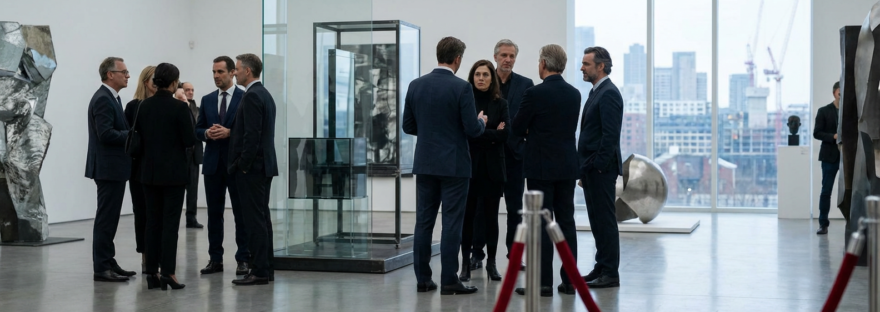
Walk into any blue-chip gallery in Chelsea or Mayfair and you’ll witness something remarkable. Not the art—though some of it might be genuinely great—but the choreographed dance of commerce disguised as cultural enlightenment. The hushed reverence. The strategic placement of price lists just out of casual view. The gallery assistants who’ve perfected the art of being simultaneously invisible and omnipresent.

This isn’t an accident. Every element has been carefully calibrated to create what sociologist Pierre Bourdieu called “cultural capital”—the social currency that separates the initiated from the masses. The gallery system operates on exclusion by design, using accessibility as a weapon rather than a bridge.
You don’t need an MFA or a trust fund to understand this machine. You just need to recognize that galleries aren’t neutral spaces displaying art for public edification. They’re sophisticated retail environments selling status, investment opportunities, and membership in an exclusive club. Once we acknowledge this reality, we can actually start to navigate it.

The Economics of Intimidation
Primary market galleries, those representing living artists, make their money through a carefully orchestrated scarcity model. They don’t want everyone to buy their artists’ work. They want the right people buying it. Collectors with museum-quality collections. Institutional buyers. People whose purchases validate their artists’ market position.
This creates the infamous “gallery wait list”—a mythical queue that may or may not exist but creates desire through artificial scarcity. Young collectors get told they need to “build a relationship” with the gallery, code for proving their commitment through smaller purchases and social networking.
Secondary market galleries and auction houses profit from the speculation this system generates. They’re selling yesterday’s discoveries at tomorrow’s prices, banking on the primary market’s ability to create lasting cultural value. It’s a pyramid scheme with prettier packaging.
Here’s the kicker: much of the most innovative contemporary art emerges from artist-run spaces, university galleries, and alternative venues operating outside this economy entirely. The gallery system often discovers and commodifies work that already exists in more accessible contexts.
Decoded: The Language of Exclusion
Gallery wall texts read like academic papers stripped of citations and injected with marketing speak. “Jones interrogates the liminal space between representation and reality” translates to “Jones makes paintings that look weird.” This jargon signals insider knowledge, justifies premium pricing, and creates barriers for uninitiated viewers.
Art criticism follows similar patterns. Reviews in major publications often read like encrypted messages between initiated parties rather than genuine attempts at public communication. They’re written for other critics, curators, and collectors, not for readers genuinely curious about the work being discussed.
Press releases represent the worst offenses. They generate coverage without actually describing what visitors will see. “Utilizing found materials and conceptual frameworks” describes anything from Marcel Duchamp’s readymades to someone’s garage sale assemblage.
Learning to decode this language isn’t about becoming fluent in artspeak. It’s about recognizing when it’s being used to obscure rather than illuminate, and demanding clearer communication from institutions that claim to work in the public interest.
The Curator as Tastemaker
Contemporary curators wield unprecedented influence over what art gets seen, discussed, and ultimately preserved. They’re not neutral scholars but active participants in shaping cultural value. Understanding their role means recognizing the subjective nature of what gets labeled “important” art.
Institutional curators, those working for museums and major art centers, balance multiple pressures. They satisfy board members who often double as major collectors. They need to attract visitors and media attention. They’re expected to contribute to art historical discourse while managing budgets and political considerations.
Independent curators operate in a different ecosystem, often working project-by-project with greater creative freedom but less institutional support. They’re typically more experimental, more willing to take risks with unknown artists or challenging concepts.
The best curators become storytellers, creating exhibitions that reveal new connections between disparate works or artists. They make arguments through spatial arrangements, wall texts, and programming. Understanding their perspective helps decode why certain works appear together and what larger narratives they’re constructing.
Finding Your Way In
The gallery system’s exclusivity is largely performative. Most spaces are legally required to allow public access during posted hours. Gallery staff are generally happy to discuss works with genuinely curious visitors. The intimidation factor exists primarily in visitors’ minds, reinforced by social conditioning about who “belongs” in these spaces.
Start with alternative spaces and university galleries. They’re typically more welcoming to newcomers and often show more experimental work. Artist-run spaces frequently host opening receptions where you can meet the creators directly. These venues operate with fewer pretensions and more genuine enthusiasm for the work itself.
When visiting commercial galleries, remember you’re under no obligation to buy anything or prove your expertise. Ask questions. Request price lists if you’re curious about market values. Read everything available about the artists and works. Most gallery staff genuinely enjoy discussing the art with interested visitors.
Gallery openings remain one of the best ways to observe the social dynamics at play. They’re theater as much as art events, spaces where the audience becomes part of the spectacle. Understanding who attends these events and how they interact reveals as much about the art world as the works on the walls.
The contemporary art world needs curious outsiders willing to ask uncomfortable questions and challenge lazy assumptions. Your perspective matters precisely because you haven’t been trained to accept the system’s artificial barriers as natural law. The most exciting developments in contemporary art often come from people willing to ignore conventional wisdom about how things are supposed to work.
