The Death of the $100,000 Studio
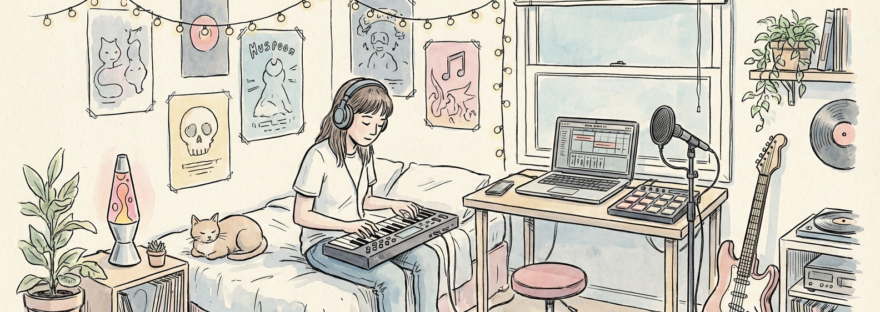
Music production has changed completely. Walk into any teenager’s bedroom today and you might find a setup that can create Billboard-charting records. The numbers are wild: roughly seven out of every ten tracks uploaded to Spotify this year came from home recording setups. This isn’t amateur hour anymore.
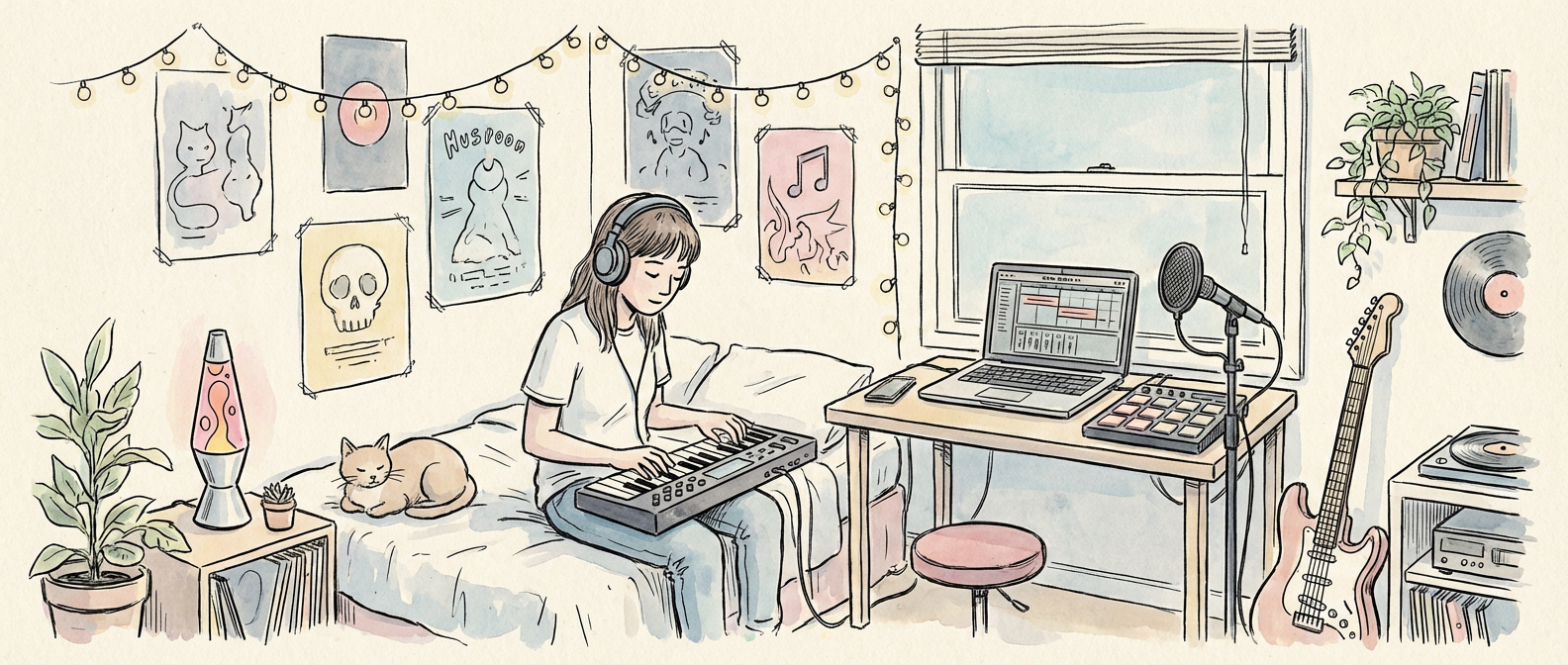
It started with software. Digital Audio Workstations like Ableton Live, FL Studio, and Logic Pro have killed off traditional barriers completely. What used to need a massive mixing console, analog tape machines, and acoustically treated rooms now fits inside a laptop. The learning curve is still steep, but the financial barriers have disappeared.
This shift has created a completely new ecosystem of creators. Bedroom producers aren’t trying to copy Abbey Road’s pristine sound. They’re making something different, intimate and deliberately rough around the edges. The imperfections have become the point.

Bedroom Pop’s Unexpected Billboard Journey
The bedroom pop movement shows how radical this change has been. Since 2019, artists working from cramped apartments and childhood bedrooms have consistently hit Billboard charts. These aren’t one-hit wonders or viral moments that disappear quickly. They represent a real shift in how music gets made and consumed.
The genre’s signature sound comes directly from its production limits. That lo-fi warmth? It often happens when cheap audio interfaces get pushed too hard. The dreamy, compressed vocals? That’s bedroom acoustics and budget microphones doing their thing naturally. What started as limitations became the defining sound, then deliberate choices.
Modern bedroom pop producers have turned technical problems into artistic advantages. They know their tools inside and out, understanding exactly how to pull certain textures from entry-level equipment. This close relationship between creator and technology drives the genre’s continued growth.
The Sample Clearance Divide
Independent artists hit a brick wall when it comes to sampling. Classic breaks and iconic loops remain completely out of reach for most bedroom producers. Sample clearance costs can run thousands of dollars per use, creating an immediate gap between major label artists and independent creators.
This money barrier has forced creative solutions. Producers dig deeper into obscure catalogs, hunting for undiscovered gems that won’t trigger expensive licensing fees. Others rebuild famous samples note by note, creating legal alternatives that capture the original’s feel without the copyright headaches.
AI-powered stem separation tools have made this landscape even more complicated. These applications can isolate individual instruments from finished recordings with scary accuracy, enabling unauthorized remixing and sampling at a massive scale. The technology moves faster than current copyright frameworks, leaving artists and labels scrambling to protect their work.
Some producers embrace this gray area on purpose, using AI separation to create transformative works that push legal boundaries. Others avoid the technology completely, sticking with the certainty of original compositions or properly cleared samples.
The Physical Renaissance in a Digital Age
While bedroom producers create entirely digital workflows, their audience increasingly wants physical artifacts. Vinyl sales have beaten CD sales for the third straight year in 2025, which seems backwards in our streaming world.
This vinyl comeback speaks to the desire for real connection with music. Bedroom pop artists get this instinctively, often releasing limited pressings that become collector’s items. The format’s natural warmth complements the genre’s sound perfectly, adding another layer of nostalgic texture to the listening experience.
The relationship between digital creation and analog consumption creates weird contradictions. Artists might craft an entire album using software plugins that mimic vintage gear, then press it to actual vinyl to achieve the authentic analog sound they were simulating. This loop between real and artificial has become part of the art form itself.
Record pressing plants can’t keep up with demand, creating months-long wait times that only increase vinyl’s perceived value. Independent artists plan releases around these constraints, building anticipation through scarcity rather than abundance.
Craft in the Age of Accessibility
The technical accessibility of modern production tools has made craft matter more than equipment. When anyone can download professional-grade software, success depends entirely on skill, taste, and vision. Sound on Sound production tutorials teach techniques once guarded by professional engineers, spreading knowledge that was previously exclusive.
This has created new hierarchies based on artistic merit rather than financial resources. Bedroom producers develop distinctive sonic signatures through years of experimenting with the same basic tools everyone else uses. Their innovations come from creative problem-solving, not expensive gear purchases.
The most successful bedroom producers understand their medium completely. They know how different plugin combinations interact, how to exploit digital artifacts creatively, and how to balance polished elements with intentional imperfections. This deep technical knowledge becomes their primary creative instrument.
Critics and industry professionals have taken notice. Publications like Pitchfork music criticism regularly feature bedroom-produced albums alongside major label releases, recognizing artistic achievement regardless of production budget or studio pedigree.
The bedroom production revolution keeps evolving as new tools emerge and creative boundaries expand. Every software update, every innovative plugin, every breakthrough technique becomes immediately available to millions of potential creators worldwide. Where this leads depends entirely on the imagination and dedication of those willing to explore the possibilities hidden within their humble home studios.
